Upgrading a Rental Property? How Furniture Exchange Saves Landlords Money
A practical guide to lowering the net cost and the hassle of refurnishing a rental between tenants

Every landlord knows the moment: a tenant leaves, and the furniture that looked fine at the start of the lease now looks tired. The sofa has flattened, a wardrobe door hangs at an angle, the mattress has seen better days. Replacing it all is worth doing, but it comes with two costs: the new furniture, and the awkward business of getting rid of the old.
TFP's Furniture Exchange addresses both at once. This guide explains how it can work for a rental property, where it helps, where it does not, and how to fit it around a tenant changeover. To be clear about the title: the aim is to reduce your net cost and your hassle. Exchange values are never guaranteed, so this article will not promise a saving. It will help you judge whether one is likely in your situation.
How Furniture Exchange works, in brief
You submit eligible old furniture for assessment. If it is approved, an exchange value is applied toward new TFP furniture, and you pay the difference. It is not paid as cash. There is no separate landlord or bulk programme: this is the standard customer Furniture Exchange, with no trade pricing or dedicated account. It is a promotional campaign, so confirm it is active and check current terms on the Furniture Exchange page at tfp.mu before you plan around it. The full process is explained in Trade In, Upgrade Up: How TFP's Furniture Exchange Works.
Where the Value Comes From
“Saves money” can mean several things, and it helps to separate them. Furniture Exchange can lower a landlord's costs in three ways:
- A lower net price on the replacement. An approved exchange value reduces what you pay for new furniture. It is a maximum-based estimate until inspection, and it varies by item.
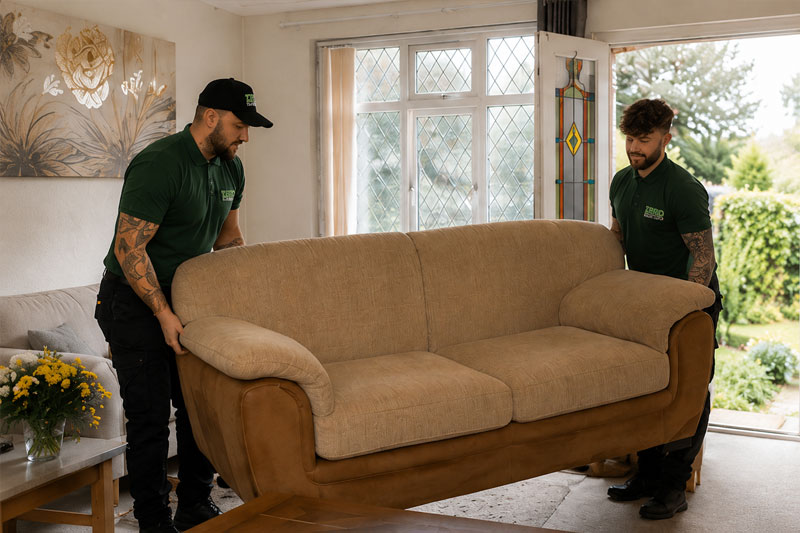
- No separate disposal to organise. Without exchange, you may be arranging a removal service, dump runs or storage for large old pieces. Free collection of old furniture is part of the campaign (terms and conditions apply), and it is arranged by TFP.
- Less time and coordination. One supplier assesses the old pieces, supplies the new ones and, where logistically possible, coordinates collection with delivery. Between tenants, when time is short, that matters.
Selling old rental furniture privately may achieve a higher price in some cases, and it is a valid choice if you have the time. But it involves photographs, listings, buyer enquiries, negotiation and waiting. Furniture Exchange prioritises convenience, certainty and coordination, which is what many landlords are short of at a changeover.
Old Rental Furniture: What Qualifies and What Doesn't
Landlords typically deal with the same handful of problems: general wear, outdated pieces, sagging sofas, tired mattresses, damaged wardrobe doors, and the occasional item a tenant left behind. Many of these can still be assessed. Furniture does not have to be perfect, and it does not need to have been bought from TFP.
Likely to be assessed
Scratches, faded upholstery, sagging cushions, small chips, minor stains, torn upholstery where the piece is structurally sound, and some damaged wardrobe doors. Condition is the most important factor, followed by age, size, furniture type, original construction and reuse potential.
Likely to reduce the value
Broken frames, significant door or drawer damage, mechanical failures, severe staining, deep gouges, delamination, extensive veneer damage, extreme foam compression and major fabric deterioration.
Likely to be rejected
Heavy mould, pest infestation (including bedbugs and termites), severe water damage, severe biological contamination, and structural failure that makes a piece unsafe to handle. Mattresses are assessed more strictly for hygiene. Rental furniture in heavy use is treated by the same condition rules as any other furniture.
If an item is rejected, you will need another route for it, such as a removal service, so factor that in before you rely on exchange for every piece. Recent campaign communications used these maximums:
| Category | Recent campaign maximum |
|---|---|
| Sofa | Up to Rs 5,000 |
| Wardrobe | Up to Rs 3,000 |
| Bed | Up to Rs 2,500 |
| Mattress | Up to Rs 1,500 |
| Other furniture | Up to Rs 1,500 |
Recent campaign maximums, subject to change. Confirm current values with TFP. “Up to” is the highest possible value for a qualifying item, not what every item receives. The initial estimate from photographs is not a guaranteed amount, and the final value is confirmed at physical inspection.
See How an Exchange Works
A short explainer of the process, from submitting photographs to old furniture out and new furniture in.
A Changeover Workflow for Landlords
The biggest risk in a rental refurbishment is timing. A tenant leaves, the next one is due, and the furniture has to change in between. Starting the exchange early gives you room to absorb any delay. Assessment timing varies with campaign and request volume, so confirm current timing at tfp.mu and do not fix a tenant move-in date around an assumed turnaround.
| Stage | What to do | Watch for |
|---|---|---|
| 1. Before the tenant leaves | Decide what to replace, and photograph existing furniture honestly | Occupied property: arrange access with the tenant in advance |
| 2. Submit early | Send photographs and details through tfp.mu, WhatsApp or a showroom | Confirm the campaign is active |
| 3. Choose replacements | Select new pieces once the estimate arrives | The estimate is not a final value |
| 4. Confirm | Physical assessment confirms eligibility and value | Value may be revised if the condition differs from the photographs |
| 5. Schedule | Arrange collection and delivery around the changeover date | Coordinated where logistically possible; same-day service is not guaranteed |
| 6. Before the next tenant | Check the new furniture is in place and the property is ready | Allow a buffer before move-in |
Important: do not dismantle, sell, or discard old furniture before the exchange has been formally approved and collection has been officially scheduled.
What to prepare before you submit
- Furniture type and configuration for each piece
- Photographs: full front, side and back, close-ups of any damage, and a room image
- An honest description of condition, including tenant damage
- Access details: floors, lifts, narrow staircases, long carry distances, parking, and any building rules for moving large items
- Whether large wardrobes or beds need dismantling. Do not assume this is included, and discuss it when scheduling
- Your contact details, and the tenant's if access is needed while the property is occupied
Honest photographs matter especially with rental furniture, where damage is common. Hiding it only invites a lower value or a rejection at inspection.
Points to confirm with TFP first
Several details depend on your situation and current terms, and are worth settling before you commit:
- Whether you can use the exchange for furniture in a property you own but do not live in, and whether proof of ownership or authorisation is needed.
- Whether an agent or property manager can submit on the owner's behalf.
- Whether furniture left behind by a previous tenant is eligible.
- Whether several items, or items from several units, can be combined, and any limits per person or per property.
- Whether collection from one property and delivery to another can be arranged.
- Whether exchange can be combined with other promotions, clearance items or bundles.
Choosing the Replacements, and Knowing When Exchange Fits
What to replace first
Sofas, beds and mattresses, wardrobes and dining sets are the categories that matter most, both for the exchange and for how a rental feels to a new tenant. You do not have to replace everything at once. One important piece can change how a whole room feels, and many landlords will prefer to upgrade in stages. Space-efficient formats suit many Mauritian rentals: L-shaped sofas for more seating in a cohesive footprint, sliding wardrobes that need no swing clearance, and extendable dining sets that stay compact day to day. If you are replacing a mattress, Royal Lux is one option, with current model terms to be confirmed at the point of purchase.
For style, warm greys, beige, greige and oak- or walnut-compatible neutrals tend to feel current beside older honey-oak and dark-brown pieces. Warm, humid conditions and strong sunlight can affect some materials. PU leather can deteriorate more quickly in Mauritius's climate, and fabric near windows and sliding doors can fade, so consider both when you choose upholstery for a property you will not be living in.
Measure each room, and the route the furniture will take to reach it. Compact apartments, older buildings without lifts and narrow staircases all affect what can be delivered.
When Furniture Exchange makes sense for a landlord
It makes sense when the old sofas, beds, wardrobes or dining sets are worn or outdated, you are working to a changeover deadline, and you would rather have collection handled than organise disposal yourself.
Consider selling privately when you want the highest possible price and have the time to manage buyers.
Consider keeping or repairing when a piece is structurally sound and only cosmetically tired.
Do not rely on it when the campaign is not active, or the furniture is likely to be rejected for mould, pests, severe water damage or unsafe structural failure.
If you plan to finance the replacement furniture, CIM Finance and Rogers Capital options can typically be applied to the balance remaining after the exchange value. Subject to approval and current terms. For any questions on invoicing, VAT or the tax treatment of furnishing costs, speak to your own adviser, as this article cannot advise on them.
Frequently Asked Questions
Can landlords use Furniture Exchange for rental property furniture?
Landlords can generally use the standard Furniture Exchange, and there is no separate landlord programme. Confirm with TFP whether any proof of ownership or authorisation is needed for a property you do not live in.
Can I exchange furniture left behind by a tenant?
Confirm this with TFP. Eligibility depends on current terms and on the condition of the furniture.
Does exchange work for several units?
Whether several items or items from several units can be combined should be confirmed with TFP, along with any limits on the number of items or exchanges.
How early should I start before a new tenant moves in?
Start as early as you can. Assessment timing varies with campaign and request volume, so confirm current timing at tfp.mu and build a buffer before the move-in date.
What if the furniture is assessed below the maximum?
That is common. “Up to” figures are maximums for qualifying items, and the value depends on condition, type, size and eligibility. The photo-based estimate is not final, and TFP may revise it after inspection.
Can I finance the replacement furniture?
Financing through CIM Finance or Rogers Capital can typically be applied to the balance after the exchange value, subject to approval and current terms.
Does the old furniture need to be from TFP?
No. Furniture from other retailers, imported furniture and locally manufactured furniture can qualify, depending on condition.
Refurnishing a rental will always take money and planning. Furniture Exchange will not remove either, but it can lower what you pay for the new pieces and take the disposal of the old ones off your list. Before you build it into a changeover, check the Furniture Exchange page at tfp.mu, confirm the campaign is active and the terms are current, and ask TFP about your rental before you submit. To start choosing replacements, browse sofas, beds, wardrobes and dining sets, or read New vs. Traded: Is Furniture Exchange Right for You? and A Designer's Guide to Furniture Exchange for Client Projects.
Upgrading a Rental Property? How Furniture Exchange Saves Landlords Money
A practical guide to lowering the net cost and the hassle of refurnishing a rental between tenants
Every landlord knows the moment: a tenant leaves, and the furniture that looked fine at the start of the lease now looks tired. The sofa has flattened, a wardrobe door hangs at an angle, the mattress has seen better days. Replacing it all is worth doing, but it comes with two costs: the new furniture, and the awkward business of getting rid of the old.
TFP's Furniture Exchange addresses both at once. This guide explains how it can work for a rental property, where it helps, where it does not, and how to fit it around a tenant changeover. To be clear about the title: the aim is to reduce your net cost and your hassle. Exchange values are never guaranteed, so this article will not promise a saving. It will help you judge whether one is likely in your situation.
How Furniture Exchange works, in brief
You submit eligible old furniture for assessment. If it is approved, an exchange value is applied toward new TFP furniture, and you pay the difference. It is not paid as cash. There is no separate landlord or bulk programme: this is the standard customer Furniture Exchange, with no trade pricing or dedicated account. It is a promotional campaign, so confirm it is active and check current terms on the Furniture Exchange page at tfp.mu before you plan around it. The full process is explained in Trade In, Upgrade Up: How TFP's Furniture Exchange Works.
Where the Value Comes From
“Saves money” can mean several things, and it helps to separate them. Furniture Exchange can lower a landlord's costs in three ways:
- A lower net price on the replacement. An approved exchange value reduces what you pay for new furniture. It is a maximum-based estimate until inspection, and it varies by item.
- No separate disposal to organise. Without exchange, you may be arranging a removal service, dump runs or storage for large old pieces. Free collection of old furniture is part of the campaign (terms and conditions apply), and it is arranged by TFP.
- Less time and coordination. One supplier assesses the old pieces, supplies the new ones and, where logistically possible, coordinates collection with delivery. Between tenants, when time is short, that matters.
Selling old rental furniture privately may achieve a higher price in some cases, and it is a valid choice if you have the time. But it involves photographs, listings, buyer enquiries, negotiation and waiting. Furniture Exchange prioritises convenience, certainty and coordination, which is what many landlords are short of at a changeover.
Old Rental Furniture: What Qualifies and What Doesn't
Landlords typically deal with the same handful of problems: general wear, outdated pieces, sagging sofas, tired mattresses, damaged wardrobe doors, and the occasional item a tenant left behind. Many of these can still be assessed. Furniture does not have to be perfect, and it does not need to have been bought from TFP.
Likely to be assessed
Scratches, faded upholstery, sagging cushions, small chips, minor stains, torn upholstery where the piece is structurally sound, and some damaged wardrobe doors. Condition is the most important factor, followed by age, size, furniture type, original construction and reuse potential.
Likely to reduce the value
Broken frames, significant door or drawer damage, mechanical failures, severe staining, deep gouges, delamination, extensive veneer damage, extreme foam compression and major fabric deterioration.
Likely to be rejected
Heavy mould, pest infestation (including bedbugs and termites), severe water damage, severe biological contamination, and structural failure that makes a piece unsafe to handle. Mattresses are assessed more strictly for hygiene. Rental furniture in heavy use is treated by the same condition rules as any other furniture.
If an item is rejected, you will need another route for it, such as a removal service, so factor that in before you rely on exchange for every piece. Recent campaign communications used these maximums:
| Category | Recent campaign maximum |
|---|---|
| Sofa | Up to Rs 5,000 |
| Wardrobe | Up to Rs 3,000 |
| Bed | Up to Rs 2,500 |
| Mattress | Up to Rs 1,500 |
| Other furniture | Up to Rs 1,500 |
Recent campaign maximums, subject to change. Confirm current values with TFP. “Up to” is the highest possible value for a qualifying item, not what every item receives. The initial estimate from photographs is not a guaranteed amount, and the final value is confirmed at physical inspection.
See How an Exchange Works
A short explainer of the process, from submitting photographs to old furniture out and new furniture in.
A Changeover Workflow for Landlords
The biggest risk in a rental refurbishment is timing. A tenant leaves, the next one is due, and the furniture has to change in between. Starting the exchange early gives you room to absorb any delay. Assessment timing varies with campaign and request volume, so confirm current timing at tfp.mu and do not fix a tenant move-in date around an assumed turnaround.
| Stage | What to do | Watch for |
|---|---|---|
| 1. Before the tenant leaves | Decide what to replace, and photograph existing furniture honestly | Occupied property: arrange access with the tenant in advance |
| 2. Submit early | Send photographs and details through tfp.mu, WhatsApp or a showroom | Confirm the campaign is active |
| 3. Choose replacements | Select new pieces once the estimate arrives | The estimate is not a final value |
| 4. Confirm | Physical assessment confirms eligibility and value | Value may be revised if the condition differs from the photographs |
| 5. Schedule | Arrange collection and delivery around the changeover date | Coordinated where logistically possible; same-day service is not guaranteed |
| 6. Before the next tenant | Check the new furniture is in place and the property is ready | Allow a buffer before move-in |
Important: do not dismantle, sell, or discard old furniture before the exchange has been formally approved and collection has been officially scheduled.
What to prepare before you submit
- Furniture type and configuration for each piece
- Photographs: full front, side and back, close-ups of any damage, and a room image
- An honest description of condition, including tenant damage
- Access details: floors, lifts, narrow staircases, long carry distances, parking, and any building rules for moving large items
- Whether large wardrobes or beds need dismantling. Do not assume this is included, and discuss it when scheduling
- Your contact details, and the tenant's if access is needed while the property is occupied
Honest photographs matter especially with rental furniture, where damage is common. Hiding it only invites a lower value or a rejection at inspection.
Points to confirm with TFP first
Several details depend on your situation and current terms, and are worth settling before you commit:
- Whether you can use the exchange for furniture in a property you own but do not live in, and whether proof of ownership or authorisation is needed.
- Whether an agent or property manager can submit on the owner's behalf.
- Whether furniture left behind by a previous tenant is eligible.
- Whether several items, or items from several units, can be combined, and any limits per person or per property.
- Whether collection from one property and delivery to another can be arranged.
- Whether exchange can be combined with other promotions, clearance items or bundles.
Choosing the Replacements, and Knowing When Exchange Fits
What to replace first
Sofas, beds and mattresses, wardrobes and dining sets are the categories that matter most, both for the exchange and for how a rental feels to a new tenant. You do not have to replace everything at once. One important piece can change how a whole room feels, and many landlords will prefer to upgrade in stages. Space-efficient formats suit many Mauritian rentals: L-shaped sofas for more seating in a cohesive footprint, sliding wardrobes that need no swing clearance, and extendable dining sets that stay compact day to day. If you are replacing a mattress, Royal Lux is one option, with current model terms to be confirmed at the point of purchase.
For style, warm greys, beige, greige and oak- or walnut-compatible neutrals tend to feel current beside older honey-oak and dark-brown pieces. Warm, humid conditions and strong sunlight can affect some materials. PU leather can deteriorate more quickly in Mauritius's climate, and fabric near windows and sliding doors can fade, so consider both when you choose upholstery for a property you will not be living in.
Measure each room, and the route the furniture will take to reach it. Compact apartments, older buildings without lifts and narrow staircases all affect what can be delivered.
When Furniture Exchange makes sense for a landlord
It makes sense when the old sofas, beds, wardrobes or dining sets are worn or outdated, you are working to a changeover deadline, and you would rather have collection handled than organise disposal yourself.
Consider selling privately when you want the highest possible price and have the time to manage buyers.
Consider keeping or repairing when a piece is structurally sound and only cosmetically tired.
Do not rely on it when the campaign is not active, or the furniture is likely to be rejected for mould, pests, severe water damage or unsafe structural failure.
If you plan to finance the replacement furniture, CIM Finance and Rogers Capital options can typically be applied to the balance remaining after the exchange value. Subject to approval and current terms. For any questions on invoicing, VAT or the tax treatment of furnishing costs, speak to your own adviser, as this article cannot advise on them.
Frequently Asked Questions
Can landlords use Furniture Exchange for rental property furniture?
Landlords can generally use the standard Furniture Exchange, and there is no separate landlord programme. Confirm with TFP whether any proof of ownership or authorisation is needed for a property you do not live in.
Can I exchange furniture left behind by a tenant?
Confirm this with TFP. Eligibility depends on current terms and on the condition of the furniture.
Does exchange work for several units?
Whether several items or items from several units can be combined should be confirmed with TFP, along with any limits on the number of items or exchanges.
How early should I start before a new tenant moves in?
Start as early as you can. Assessment timing varies with campaign and request volume, so confirm current timing at tfp.mu and build a buffer before the move-in date.
What if the furniture is assessed below the maximum?
That is common. “Up to” figures are maximums for qualifying items, and the value depends on condition, type, size and eligibility. The photo-based estimate is not final, and TFP may revise it after inspection.
Can I finance the replacement furniture?
Financing through CIM Finance or Rogers Capital can typically be applied to the balance after the exchange value, subject to approval and current terms.
Does the old furniture need to be from TFP?
No. Furniture from other retailers, imported furniture and locally manufactured furniture can qualify, depending on condition.
Refurnishing a rental will always take money and planning. Furniture Exchange will not remove either, but it can lower what you pay for the new pieces and take the disposal of the old ones off your list. Before you build it into a changeover, check the Furniture Exchange page at tfp.mu, confirm the campaign is active and the terms are current, and ask TFP about your rental before you submit. To start choosing replacements, browse sofas, beds, wardrobes and dining sets, or read New vs. Traded: Is Furniture Exchange Right for You? and A Designer's Guide to Furniture Exchange for Client Projects.