Storage Solutions: Trade In Bulky Furniture for Space-Saving Pieces
A room does not always need less furniture — it needs furniture that uses the available space better. From 3+2+1 sofa sets and oversized wardrobes to fixed dining tables and deep TV units, here is how Mauritian homes can replace bulky pieces with smarter, better-proportioned alternatives.
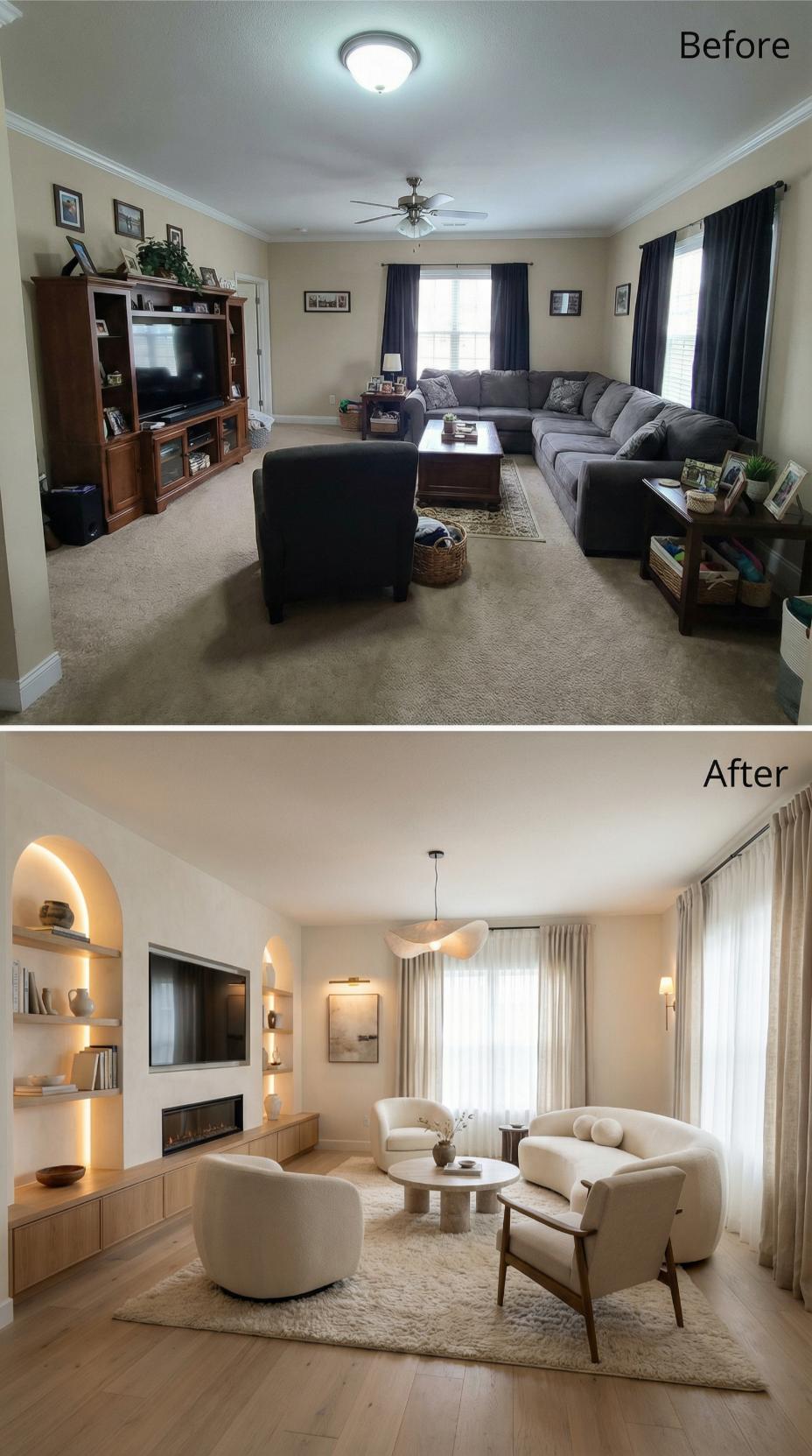
Sometimes a room feels too small when the real problem is not the room at all.
It is the furniture.
A 3+2+1 sofa set can divide a living room into three separate furniture zones.
A hinged wardrobe can technically fit against the wall while its doors consume the space needed to walk through the bedroom.
A fixed 8-seater dining table can dominate an open-plan area even though only three or four people use it most days.
A deep TV unit may provide storage, but if it projects too far into the room, it can make the entire living area feel narrower.
This is especially relevant in Mauritius, where apartments, open-plan layouts and compact modern homes make furniture proportions more important than ever.
The goal is not always to own less furniture — it is to use the available space better.
That means avoiding one of the most common mistakes in small-space furnishing:
Assuming smaller furniture is automatically better.
It is not.
A small wardrobe with poor internal organisation may store less than a larger sliding wardrobe that uses the full height of the wall.
Three separate storage pieces may consume more floor space than one properly designed larger unit.
A fixed compact table may actually be less useful than an extendable table that stays small every day and expands when family visits.
The better question is:
How much useful function am I getting from the space this furniture occupies?
That is the principle behind every space-saving upgrade in this guide.
Why Furniture Can Make a Room Feel Smaller Than It Is
Bulky furniture creates space problems in three different ways.
1. It Can Simply Be Too Large
This is the most obvious problem.
The sofa, wardrobe or dining table physically exceeds the proportions of the room.
It may still technically fit.
But furniture that leaves only narrow walking paths or forces people to turn sideways to move around the room is not properly proportioned.
2. It Can Be Poorly Proportioned
A piece can feel visually heavy even when its measurements are technically acceptable.
A deep entertainment centre, tall dark sideboard or bulky traditional sofa can dominate a compact room visually and physically.
3. It Can Use Space Inefficiently
This is the least obvious problem — and often the most important.
A piece can take up a lot of room without giving enough function back.
A wide wardrobe may have poor shelf organisation.
A large TV unit may duplicate storage already provided by a separate sideboard.
A complete bedroom set may contain five matching pieces even though the room comfortably supports only three.
The best space-saving furniture is not necessarily the smallest piece — it is the piece that gives the most useful function for the space it occupies.
The Most Common Space Problems TFP Sees
Several furniture categories create the same issues repeatedly in Mauritian homes.
- 3+2+1 sofa sets — three separate pieces occupying more floor area and creating dead gaps.
- Large hinged wardrobes — especially where door swing interferes with walking space.
- Large fixed dining tables — sized for occasional gatherings rather than everyday use.
- Deep TV units — projecting unnecessarily into the room.
- Oversized bedroom sets — bed, two bedside tables, dresser and wardrobe all competing for limited space.
- Heavy sideboards — large footprint relative to storage function.
- Oversized coffee tables — consuming valuable circulation space.
- Large office desks — particularly L-shaped desks squeezed into bedroom corners.
Why Showrooms Can Make Furniture Look Smaller
One of the most common post-delivery surprises happens because furniture is judged in a showroom rather than in the customer’s own room.
Showrooms typically have:
- Large open floor areas.
- High ceilings.
- Wide circulation paths.
- Fewer surrounding objects.
Furniture therefore appears smaller and less visually dominant than it will in a compact apartment bedroom or living room.
This is why estimating whether something “looks like it will fit” is rarely enough.
Measure the Room — Not Just the Wall
Before replacing bulky furniture, measure:
- Available wall lengths.
- Furniture depth.
- Room doors and their swing paths.
- Wardrobe door clearance.
- Window positions.
- Electrical sockets.
- Walking paths.
- Existing furniture footprints.
- Doorways and corridors used during delivery.
- Staircases and lift dimensions.
Depth deserves particular attention.
Customers often measure only width.
But a wardrobe that is 200cm wide and 60cm deep projects a full 60cm into the room.
In a compact bedroom, that depth can matter more than the width.
Try the Tape Test
Before committing to a large piece, use masking tape on the floor to mark its full footprint.
Then live with the outline for a few minutes.
Walk around it.
Open the room door.
Stand where the wardrobe doors would open.
Sit where the sofa would begin.
This simple exercise costs almost nothing and can reveal immediately whether the proposed furniture is too large.
Circulation rule: Leave enough space to walk comfortably without turning sideways or moving around furniture awkwardly.

Space-Saving Swap #1: 3+2+1 Sofa Set → L-Shaped Sofa
This is one of the strongest living-room transformations TFP sees.
A traditional 3+2+1 sofa configuration creates three separate footprints.
Between those pieces are gaps.
Those gaps are not really useful floor space.
They cannot usually hold another piece of furniture.
They are simply dead areas required to separate the seating.
An L-shaped sofa consolidates the seating into one defined footprint.
The benefits can include:
- Equivalent or improved seating capacity.
- Fewer dead gaps between furniture pieces.
- Cleaner circulation through the room.
- A more defined living zone in open-plan spaces.
- A more contemporary visual appearance.
But there is an important warning:
An L-shaped sofa is not automatically smaller. If you replace an oversized 3+2+1 set with an oversized L-shape, the room is still overcrowded. The advantage comes from choosing the correct overall footprint and using the space more logically.
Space-Saving Swap #2: Hinged Wardrobe → Sliding Wardrobe
The strongest bedroom example is often a wardrobe change.
A hinged wardrobe requires two kinds of space:
- The space occupied by the wardrobe itself.
- The clearance needed for the doors to swing open.
A sliding wardrobe eliminates the second requirement.
That makes it particularly useful in compact bedrooms, narrow rooms and bedrooms where the bed sits relatively close to the wardrobe wall.
Sometimes the Larger Wardrobe Is the Better Space-Saving Choice
This sounds contradictory.
But consider this setup:
Before:
- Small 2-door wardrobe.
- Separate chest of drawers.
- Storage boxes on top.
- Overflow clothing on a chair.
Four separate storage solutions are using the room.
Now compare:
After:
- One larger sliding wardrobe.
- Better internal organisation.
- No hinged-door clearance.
- No separate chest of drawers.
- No overflow boxes.
The new wardrobe may be physically larger than the old wardrobe.
But the room contains fewer separate pieces.
The total usable floor area can improve.
Sometimes the space-saving upgrade is actually the larger piece — because it replaces three inefficient ones.
Illustrative Wardrobe Exchange
Old wardrobe assessed: Rs 1,800
Illustrative new sliding wardrobe: Rs 22,000
Illustrative balance after exchange: Rs 20,200
Illustrative only; actual values depend on assessment and current campaign terms. New furniture prices are subject to change.
Space-Saving Swap #3: Fixed Dining Table → Extendable Table
Mauritian dining rooms often need to serve two very different household sizes.
Most days, perhaps three to five people use the table.
Then family arrives.
Sunday lunch, birthdays, Eid, Christmas, New Year or another gathering suddenly requires seating for eight, ten or more.
A fixed 8-seater solves the occasional problem by creating a daily one.
It occupies maximum floor area every day, even when most of those seats are empty.
An extendable table provides a better compromise:
Compact for daily use. Extended when guests arrive.
Chairs that tuck fully beneath the table can reduce the effective dining footprint even further.
Space-Saving Swap #4: Deep Entertainment Unit → Low-Profile TV Storage
Modern televisions no longer require the deep entertainment units that were common with older equipment.
Yet many homes still contain:
- Large entertainment unit.
- Separate sideboard.
- Additional shelves.
These pieces often duplicate one another.
A lower-profile TV/storage unit can sometimes consolidate the essential storage while reducing both visual weight and physical depth.
In a smaller room, keeping the entertainment wall visually lower can also make the ceiling feel less crowded.
Space-Saving Swap #5: Oversized Coffee Table → Better-Proportioned Tables
Coffee tables are often overlooked when customers think about room size.
But an oversized central table can consume the exact space people need to walk between the sofa and the TV unit.
Alternatives include:
- Smaller proportionate coffee tables.
- Side tables.
- Nesting tables, where currently available.
- Storage coffee tables, where available.
The coffee table should feel proportionate to the sofa and leave enough surrounding space for comfortable movement.
Watch: Small Room, Better Furniture — 5 Space-Saving Swaps
See how smarter furniture configurations can improve circulation, storage and flexibility without changing the size of the room itself.
Before & After: A Compact Apartment That Works Better
BEFORE
Consider a compact Mauritian apartment with one open-plan living and dining area.
The furniture was originally purchased for a larger home.
The room contains:
- A 3+2+1 sofa set.
- A large fixed 6-seater dining table.
- A deep entertainment unit.
- A separate sideboard.
Every individual piece is useful.
Together, they overwhelm the room.
The walking route from the entrance to the kitchen is narrow.
The dining table is used by only three or four people most days.
The TV unit and sideboard perform overlapping storage functions.
The home is not necessarily too small.
The furniture is simply too large for the space.
THE PROBLEM
The family has enough seating.
Enough dining capacity.
Enough storage.
But all three functions are being provided inefficiently.
Too much floor space is being consumed to achieve them.
THE UPGRADE
The room is rethought around four changes:
- 3+2+1 sofa → correctly sized L-shaped sofa.
- Fixed dining table → extendable table.
- Deep entertainment unit → lower-profile TV/storage unit.
- Separate sideboard removed because storage is consolidated.
AFTER
The family has not lost function.
Seating capacity is the same or better.
The dining table can still expand for guests.
Storage remains available.
But the room now has:
- Better circulation.
- More usable floor space.
- Less visual clutter.
- A clearer distinction between living and dining areas.
Nothing about the apartment itself changed.
The furniture simply began working harder for the space it occupied.
Use Vertical Space Before Using More Floor Space
When floor area is limited, height becomes valuable.
Useful options include:
- Taller wardrobes.
- Full-height storage configurations.
- Higher shelving where suitable.
For bedrooms, using more of the wall height can increase storage without increasing the furniture footprint.
Customers should confirm current TFP wardrobe and storage configurations at tfp.mu.
Storage Beds Can Use Space That Usually Does Nothing
The area beneath a bed is often one of the largest unused volumes in a bedroom.
TFP offers beds with built-in storage, including drawer-storage options.
Hydraulic or lift-up storage availability varies by model and should be confirmed at tfp.mu.
Under-bed storage can be especially useful when wardrobe space is limited.
But it should supplement adequate storage rather than compensate for a bedroom that contains far more belongings than it can realistically hold.
Multifunctional Furniture Can Help — If You Actually Use Both Functions
Examples include:
- Sofa beds.
- Storage beds.
- Extendable dining tables.
- Storage ottomans, where available.
- Nesting tables, where available.
But multifunctional furniture is not automatically space-saving.
A sofa bed is not space-saving if it overwhelms the room.
The second function only creates value if the household genuinely uses it.
Do You Need More Storage — or Less Clutter?
Before replacing a wardrobe because it feels too small, look at what is inside it.
If half the contents have not been used in years, the first problem may not be storage capacity.
It may be clutter.
Do not buy more storage for things you no longer need.
This distinction matters:
- Storage shortage: The household genuinely needs more useful storage capacity.
- Clutter problem: Existing storage is filled with items that no longer need to be kept.
Decluttering first can sometimes solve the problem without requiring another furniture purchase.
If the storage shortage remains afterward, then the furniture issue is real.
Small Home Office? Choose Surface Area You Will Actually Use
Many Mauritian households now work or study from:
- Bedroom corners.
- Shared family rooms.
- Compact spare rooms.
In these spaces, a large L-shaped desk can dominate the room unnecessarily.
A compact straight desk is often the more appropriate solution unless the work genuinely requires the additional surface area.
Bulky office desks and chairs may also be considered under TFP Furniture Exchange, subject to current “Other furniture” eligibility.
For a deeper guide to desk and chair fit, internally link to:
What Is Ergonomic Furniture and Why Does It Matter for Your Home in Mauritius?
Before You Trade It In, Try Repositioning It
Furniture Exchange should not be the first answer to every awkward room.
Sometimes the furniture itself is fine.
The layout is the problem.
Moving the sofa to another wall, rotating the dining table or removing one unnecessary side piece may improve the room without replacing anything.
That is why the decision order should be:
KEEP IT
The furniture fits well, functions well and does not obstruct the room or restrict movement.
REPOSITION IT
The furniture itself is good, but the current arrangement is inefficient. Try a different layout before spending money.
TRADE IT
The piece is too bulky for the room, gives poor function for its footprint, uses the wrong configuration or has no useful secondary role elsewhere.
SELL OR PASS IT ON
The furniture is still in good condition and another household can genuinely use it.
DISPOSE
The furniture is unsafe, structurally failed or beyond practical reuse.
How TFP Furniture Exchange Helps
When trade-in is the appropriate option, eligible categories can include:
- Sofas.
- Wardrobes.
- Beds.
- Dining sets.
- TV units, generally under “Other furniture.”
- Coffee tables, generally under “Other furniture.”
- Sideboards, generally under “Other furniture.”
- Office furniture, generally under “Other furniture.”
The furniture does not need to have been purchased from TFP.
Furniture from another retailer can still be submitted for assessment.
Recent Campaign Maximums
| Furniture Category | Recent Campaign Maximum |
|---|---|
| Sofa | Up to Rs 5,000 |
| Wardrobe | Up to Rs 3,000 |
| Bed | Up to Rs 2,500 |
| Other Furniture | Up to Rs 1,500 |
These are recent campaign maximums and are subject to assessment and change. “Up to” does not mean every item receives the maximum value.
TFP Removes the Approved Old Furniture
Once approved under the Furniture Exchange programme, TFP removes/collects the old furniture.
Free collection of old furniture. Terms and conditions apply.
Collection is island-wide under current campaign terms.
Customers should disclose access conditions before collection, including:
- Upper floors.
- No lift.
- Narrow staircases.
- Tight corridors.
- Difficult parking or restricted access.
Dismantling of wardrobes, beds and other large items should always be confirmed with TFP rather than assumed.
Important: Do not dismantle, sell or discard the old furniture before the exchange is formally approved and collection is arranged.
Why Collection Is Part of the Space-Saving Benefit
Sometimes the old furniture has already been replaced — but it never actually leaves.
The old sofa moves into a spare room.
The old wardrobe ends up in the corridor.
The dining table sits in the garage.
And a temporary arrangement becomes permanent.
Temporary furniture has a way of becoming permanent clutter.
When TFP removes approved old furniture, the space becomes available immediately for the new layout rather than remaining occupied by pieces the household has already decided not to use.
Moving House? Right-Size Before You Move
Moving from a larger house to an apartment is one of the clearest moments when furniture proportions need reassessment.
The sofa that fitted beautifully in a large living room may overwhelm the new apartment.
The 8-seater dining table may no longer make sense.
The oversized wardrobe may not even have a suitable wall.
Do not pay to move oversized furniture into the new home if it already does not fit the new space or your future needs.
Measure the new property before deciding what should move with you.
Where logistics allow, TFP can remove approved old furniture before the move and deliver the replacement to the new property.
Same-day coordination is not guaranteed and should be confirmed directly with TFP.
Think “Right-Sizing,” Not “Downsizing”
Moving to a smaller home does not mean accepting less comfort.
It means choosing furniture whose proportions match the current space.
Right-sizing may apply when:
- A family moves from a house to an apartment.
- An older couple chooses a smaller home.
- Children move out and the household needs change.
- Retirement changes the way rooms are used.
Smaller space can still be comfortable, functional and attractive when the furniture is chosen for it rather than inherited from a larger room.
Sometimes Growing Families Need a Larger Piece
Space-saving is not always about going smaller.
A growing family may have:
- One small wardrobe.
- Two chests of drawers.
- Storage boxes.
- A separate cupboard.
Replacing all of them with one larger, well-organised wardrobe may actually free more floor space.
That is why efficiency matters more than dimensions alone.
Bring the Room With You to the Showroom
TFP staff can provide practical guidance during the showroom consultation based on:
- Room dimensions.
- Furniture footprint.
- Storage requirements.
- Family size and lifestyle.
- Colour and style coordination.
For a more useful consultation, bring:
- Room measurements.
- Photographs of the room.
- A simple floor-plan sketch.
- Inspiration images.
This is practical showroom guidance rather than a formal interior design service.
Financing the Replacement
After the approved Furniture Exchange value has been applied, customers may be able to finance the remaining balance through CIM Finance or Rogers Capital, subject to approval and current terms.
Frequently Asked Questions
What furniture makes a small room feel crowded?
Furniture that is oversized, too deep, poorly proportioned or inefficiently arranged can make a room feel crowded. Common examples include 3+2+1 sofa sets, hinged wardrobes with large door clearances, oversized dining tables and deep entertainment units.
How do I know if my furniture is too big for my room?
If walking routes feel awkward, doors cannot open comfortably, furniture visually dominates the room or you regularly have to turn sideways to move through the space, the furniture may be too large or poorly positioned.
How do I measure a room before buying furniture?
Measure wall lengths, furniture depth, doors and their swing paths, windows, electrical sockets, walking routes and the delivery access route. Marking the proposed furniture footprint on the floor with tape is also useful.
Should I buy smaller furniture for a small room?
Not automatically. The goal is better-proportioned, more efficient furniture. A larger well-organised wardrobe may use space better than several smaller storage pieces.
Is larger storage sometimes more space-efficient?
Yes. One larger storage unit can sometimes replace several inefficient pieces and reduce the total floor area devoted to storage.
How can I make a small living room feel more open?
Use furniture with an appropriate footprint, reduce unnecessary separate pieces, improve circulation, choose lower-profile storage and consider consolidating seating into one correctly sized sofa configuration.
Is an L-shaped sofa better for a small living room?
It can be. An L-shape can consolidate seating and eliminate dead gaps between multiple sofa pieces, but it must still be appropriately sized for the room.
Are sliding wardrobes better for small bedrooms?
They are often more practical because the doors do not swing into the room, leaving the space in front of the wardrobe available for circulation.
Do sliding wardrobes save space?
They save clearance space rather than necessarily reducing the wardrobe dimensions themselves. This can make a significant difference in narrow bedrooms.
Are extendable dining tables good for small homes?
Yes. They can remain compact during normal daily use and expand when guests or extended family need additional seating.
What furniture is best for a small apartment in Mauritius?
The most useful choices are furniture that matches the room proportions and performs more than one useful function where appropriate — correctly sized sofas, sliding wardrobes, extendable dining tables, low-profile TV units and storage beds are good examples.
Can I trade in bulky furniture at TFP?
Yes. Eligible sofas, wardrobes, beds, dining furniture and other household furniture can be submitted for assessment while the Furniture Exchange campaign is active.
Does TFP collect old furniture?
Yes. TFP removes approved old furniture under the Furniture Exchange programme.
Is furniture collection free?
Free collection is included under current campaign terms. Terms and conditions apply.
Can I trade in a sofa from another retailer?
Yes. Furniture does not need to have been purchased from TFP originally.
Can I exchange a wardrobe for a sliding wardrobe?
Yes, subject to current Furniture Exchange eligibility and assessment. This can be a particularly useful upgrade where door-swing space is limited.
Can I exchange a fixed dining table for an extendable one?
Yes, subject to current programme terms and eligibility. This can improve day-to-day floor-space efficiency while preserving larger seating capacity when needed.
Should I move bulky furniture to my new home or replace it first?
Measure the new home first. If the furniture already does not fit the new space or future needs, replacing it before paying to move it can be more practical.
What should I do with furniture that no longer fits my home?
First try repositioning it. If it remains unsuitable, consider passing it on, selling it, submitting it for Furniture Exchange or responsibly disposing of it if it is beyond practical reuse.
Can I finance the replacement after Furniture Exchange?
Customers may be able to finance the remaining balance through CIM Finance or Rogers Capital, subject to approval and current terms.

Make Every Piece Earn the Space It Occupies
A small home does not always need less furniture.
It needs furniture that works harder.
The sofa should provide the seating the family needs without blocking circulation.
The wardrobe should store enough to reduce clutter rather than create a need for several more storage pieces.
The dining table should provide extra capacity when guests arrive without occupying maximum floor area every day.
And furniture should never remain in the room simply because it technically fits.
The better question is:
Does this piece earn the space it occupies?
A small home does not always need less furniture. It needs furniture that earns the space it occupies.
A sofa should provide the seating your family needs without blocking the room.
A wardrobe should store enough to reduce clutter rather than create more furniture around it.
A dining table should expand when guests arrive without consuming unnecessary space every day.
When bulky furniture no longer gives enough function back for the floor area it takes, replacing it can transform the room without changing a single wall.
TFP Furniture Exchange can make that transition easier by assessing the old piece, removing it once approved, and helping you move toward furniture that fits the way your home actually works today.
Furniture Exchange operates as a promotional campaign. Availability, exchange values, eligibility conditions, removal arrangements, product pricing and financing terms may change.
Before proceeding, visit tfp.mu or contact TFP directly to confirm the current Furniture Exchange campaign and applicable terms.
Storage Solutions: Trade In Bulky Furniture for Space-Saving Pieces
A room does not always need less furniture — it needs furniture that uses the available space better. From 3+2+1 sofa sets and oversized wardrobes to fixed dining tables and deep TV units, here is how Mauritian homes can replace bulky pieces with smarter, better-proportioned alternatives.
Sometimes a room feels too small when the real problem is not the room at all.
It is the furniture.
A 3+2+1 sofa set can divide a living room into three separate furniture zones.
A hinged wardrobe can technically fit against the wall while its doors consume the space needed to walk through the bedroom.
A fixed 8-seater dining table can dominate an open-plan area even though only three or four people use it most days.
A deep TV unit may provide storage, but if it projects too far into the room, it can make the entire living area feel narrower.
This is especially relevant in Mauritius, where apartments, open-plan layouts and compact modern homes make furniture proportions more important than ever.
The goal is not always to own less furniture — it is to use the available space better.
That means avoiding one of the most common mistakes in small-space furnishing:
Assuming smaller furniture is automatically better.
It is not.
A small wardrobe with poor internal organisation may store less than a larger sliding wardrobe that uses the full height of the wall.
Three separate storage pieces may consume more floor space than one properly designed larger unit.
A fixed compact table may actually be less useful than an extendable table that stays small every day and expands when family visits.
The better question is:
How much useful function am I getting from the space this furniture occupies?
That is the principle behind every space-saving upgrade in this guide.
Why Furniture Can Make a Room Feel Smaller Than It Is
Bulky furniture creates space problems in three different ways.
1. It Can Simply Be Too Large
This is the most obvious problem.
The sofa, wardrobe or dining table physically exceeds the proportions of the room.
It may still technically fit.
But furniture that leaves only narrow walking paths or forces people to turn sideways to move around the room is not properly proportioned.
2. It Can Be Poorly Proportioned
A piece can feel visually heavy even when its measurements are technically acceptable.
A deep entertainment centre, tall dark sideboard or bulky traditional sofa can dominate a compact room visually and physically.
3. It Can Use Space Inefficiently
This is the least obvious problem — and often the most important.
A piece can take up a lot of room without giving enough function back.
A wide wardrobe may have poor shelf organisation.
A large TV unit may duplicate storage already provided by a separate sideboard.
A complete bedroom set may contain five matching pieces even though the room comfortably supports only three.
The best space-saving furniture is not necessarily the smallest piece — it is the piece that gives the most useful function for the space it occupies.
The Most Common Space Problems TFP Sees
Several furniture categories create the same issues repeatedly in Mauritian homes.
- 3+2+1 sofa sets — three separate pieces occupying more floor area and creating dead gaps.
- Large hinged wardrobes — especially where door swing interferes with walking space.
- Large fixed dining tables — sized for occasional gatherings rather than everyday use.
- Deep TV units — projecting unnecessarily into the room.
- Oversized bedroom sets — bed, two bedside tables, dresser and wardrobe all competing for limited space.
- Heavy sideboards — large footprint relative to storage function.
- Oversized coffee tables — consuming valuable circulation space.
- Large office desks — particularly L-shaped desks squeezed into bedroom corners.
Why Showrooms Can Make Furniture Look Smaller
One of the most common post-delivery surprises happens because furniture is judged in a showroom rather than in the customer’s own room.
Showrooms typically have:
- Large open floor areas.
- High ceilings.
- Wide circulation paths.
- Fewer surrounding objects.
Furniture therefore appears smaller and less visually dominant than it will in a compact apartment bedroom or living room.
This is why estimating whether something “looks like it will fit” is rarely enough.
Measure the Room — Not Just the Wall
Before replacing bulky furniture, measure:
- Available wall lengths.
- Furniture depth.
- Room doors and their swing paths.
- Wardrobe door clearance.
- Window positions.
- Electrical sockets.
- Walking paths.
- Existing furniture footprints.
- Doorways and corridors used during delivery.
- Staircases and lift dimensions.
Depth deserves particular attention.
Customers often measure only width.
But a wardrobe that is 200cm wide and 60cm deep projects a full 60cm into the room.
In a compact bedroom, that depth can matter more than the width.
Try the Tape Test
Before committing to a large piece, use masking tape on the floor to mark its full footprint.
Then live with the outline for a few minutes.
Walk around it.
Open the room door.
Stand where the wardrobe doors would open.
Sit where the sofa would begin.
This simple exercise costs almost nothing and can reveal immediately whether the proposed furniture is too large.
Circulation rule: Leave enough space to walk comfortably without turning sideways or moving around furniture awkwardly.
Space-Saving Swap #1: 3+2+1 Sofa Set → L-Shaped Sofa
This is one of the strongest living-room transformations TFP sees.
A traditional 3+2+1 sofa configuration creates three separate footprints.
Between those pieces are gaps.
Those gaps are not really useful floor space.
They cannot usually hold another piece of furniture.
They are simply dead areas required to separate the seating.
An L-shaped sofa consolidates the seating into one defined footprint.
The benefits can include:
- Equivalent or improved seating capacity.
- Fewer dead gaps between furniture pieces.
- Cleaner circulation through the room.
- A more defined living zone in open-plan spaces.
- A more contemporary visual appearance.
But there is an important warning:
An L-shaped sofa is not automatically smaller. If you replace an oversized 3+2+1 set with an oversized L-shape, the room is still overcrowded. The advantage comes from choosing the correct overall footprint and using the space more logically.
Space-Saving Swap #2: Hinged Wardrobe → Sliding Wardrobe
The strongest bedroom example is often a wardrobe change.
A hinged wardrobe requires two kinds of space:
- The space occupied by the wardrobe itself.
- The clearance needed for the doors to swing open.
A sliding wardrobe eliminates the second requirement.
That makes it particularly useful in compact bedrooms, narrow rooms and bedrooms where the bed sits relatively close to the wardrobe wall.
Sometimes the Larger Wardrobe Is the Better Space-Saving Choice
This sounds contradictory.
But consider this setup:
Before:
- Small 2-door wardrobe.
- Separate chest of drawers.
- Storage boxes on top.
- Overflow clothing on a chair.
Four separate storage solutions are using the room.
Now compare:
After:
- One larger sliding wardrobe.
- Better internal organisation.
- No hinged-door clearance.
- No separate chest of drawers.
- No overflow boxes.
The new wardrobe may be physically larger than the old wardrobe.
But the room contains fewer separate pieces.
The total usable floor area can improve.
Sometimes the space-saving upgrade is actually the larger piece — because it replaces three inefficient ones.
Illustrative Wardrobe Exchange
Old wardrobe assessed: Rs 1,800
Illustrative new sliding wardrobe: Rs 22,000
Illustrative balance after exchange: Rs 20,200
Illustrative only; actual values depend on assessment and current campaign terms. New furniture prices are subject to change.
Space-Saving Swap #3: Fixed Dining Table → Extendable Table
Mauritian dining rooms often need to serve two very different household sizes.
Most days, perhaps three to five people use the table.
Then family arrives.
Sunday lunch, birthdays, Eid, Christmas, New Year or another gathering suddenly requires seating for eight, ten or more.
A fixed 8-seater solves the occasional problem by creating a daily one.
It occupies maximum floor area every day, even when most of those seats are empty.
An extendable table provides a better compromise:
Compact for daily use. Extended when guests arrive.
Chairs that tuck fully beneath the table can reduce the effective dining footprint even further.
Space-Saving Swap #4: Deep Entertainment Unit → Low-Profile TV Storage
Modern televisions no longer require the deep entertainment units that were common with older equipment.
Yet many homes still contain:
- Large entertainment unit.
- Separate sideboard.
- Additional shelves.
These pieces often duplicate one another.
A lower-profile TV/storage unit can sometimes consolidate the essential storage while reducing both visual weight and physical depth.
In a smaller room, keeping the entertainment wall visually lower can also make the ceiling feel less crowded.
Space-Saving Swap #5: Oversized Coffee Table → Better-Proportioned Tables
Coffee tables are often overlooked when customers think about room size.
But an oversized central table can consume the exact space people need to walk between the sofa and the TV unit.
Alternatives include:
- Smaller proportionate coffee tables.
- Side tables.
- Nesting tables, where currently available.
- Storage coffee tables, where available.
The coffee table should feel proportionate to the sofa and leave enough surrounding space for comfortable movement.
Watch: Small Room, Better Furniture — 5 Space-Saving Swaps
See how smarter furniture configurations can improve circulation, storage and flexibility without changing the size of the room itself.
Before & After: A Compact Apartment That Works Better
BEFORE
Consider a compact Mauritian apartment with one open-plan living and dining area.
The furniture was originally purchased for a larger home.
The room contains:
- A 3+2+1 sofa set.
- A large fixed 6-seater dining table.
- A deep entertainment unit.
- A separate sideboard.
Every individual piece is useful.
Together, they overwhelm the room.
The walking route from the entrance to the kitchen is narrow.
The dining table is used by only three or four people most days.
The TV unit and sideboard perform overlapping storage functions.
The home is not necessarily too small.
The furniture is simply too large for the space.
THE PROBLEM
The family has enough seating.
Enough dining capacity.
Enough storage.
But all three functions are being provided inefficiently.
Too much floor space is being consumed to achieve them.
THE UPGRADE
The room is rethought around four changes:
- 3+2+1 sofa → correctly sized L-shaped sofa.
- Fixed dining table → extendable table.
- Deep entertainment unit → lower-profile TV/storage unit.
- Separate sideboard removed because storage is consolidated.
AFTER
The family has not lost function.
Seating capacity is the same or better.
The dining table can still expand for guests.
Storage remains available.
But the room now has:
- Better circulation.
- More usable floor space.
- Less visual clutter.
- A clearer distinction between living and dining areas.
Nothing about the apartment itself changed.
The furniture simply began working harder for the space it occupied.
Use Vertical Space Before Using More Floor Space
When floor area is limited, height becomes valuable.
Useful options include:
- Taller wardrobes.
- Full-height storage configurations.
- Higher shelving where suitable.
For bedrooms, using more of the wall height can increase storage without increasing the furniture footprint.
Customers should confirm current TFP wardrobe and storage configurations at tfp.mu.
Storage Beds Can Use Space That Usually Does Nothing
The area beneath a bed is often one of the largest unused volumes in a bedroom.
TFP offers beds with built-in storage, including drawer-storage options.
Hydraulic or lift-up storage availability varies by model and should be confirmed at tfp.mu.
Under-bed storage can be especially useful when wardrobe space is limited.
But it should supplement adequate storage rather than compensate for a bedroom that contains far more belongings than it can realistically hold.
Multifunctional Furniture Can Help — If You Actually Use Both Functions
Examples include:
- Sofa beds.
- Storage beds.
- Extendable dining tables.
- Storage ottomans, where available.
- Nesting tables, where available.
But multifunctional furniture is not automatically space-saving.
A sofa bed is not space-saving if it overwhelms the room.
The second function only creates value if the household genuinely uses it.
Do You Need More Storage — or Less Clutter?
Before replacing a wardrobe because it feels too small, look at what is inside it.
If half the contents have not been used in years, the first problem may not be storage capacity.
It may be clutter.
Do not buy more storage for things you no longer need.
This distinction matters:
- Storage shortage: The household genuinely needs more useful storage capacity.
- Clutter problem: Existing storage is filled with items that no longer need to be kept.
Decluttering first can sometimes solve the problem without requiring another furniture purchase.
If the storage shortage remains afterward, then the furniture issue is real.
Small Home Office? Choose Surface Area You Will Actually Use
Many Mauritian households now work or study from:
- Bedroom corners.
- Shared family rooms.
- Compact spare rooms.
In these spaces, a large L-shaped desk can dominate the room unnecessarily.
A compact straight desk is often the more appropriate solution unless the work genuinely requires the additional surface area.
Bulky office desks and chairs may also be considered under TFP Furniture Exchange, subject to current “Other furniture” eligibility.
For a deeper guide to desk and chair fit, internally link to:
What Is Ergonomic Furniture and Why Does It Matter for Your Home in Mauritius?
Before You Trade It In, Try Repositioning It
Furniture Exchange should not be the first answer to every awkward room.
Sometimes the furniture itself is fine.
The layout is the problem.
Moving the sofa to another wall, rotating the dining table or removing one unnecessary side piece may improve the room without replacing anything.
That is why the decision order should be:
KEEP IT
The furniture fits well, functions well and does not obstruct the room or restrict movement.
REPOSITION IT
The furniture itself is good, but the current arrangement is inefficient. Try a different layout before spending money.
TRADE IT
The piece is too bulky for the room, gives poor function for its footprint, uses the wrong configuration or has no useful secondary role elsewhere.
SELL OR PASS IT ON
The furniture is still in good condition and another household can genuinely use it.
DISPOSE
The furniture is unsafe, structurally failed or beyond practical reuse.
How TFP Furniture Exchange Helps
When trade-in is the appropriate option, eligible categories can include:
- Sofas.
- Wardrobes.
- Beds.
- Dining sets.
- TV units, generally under “Other furniture.”
- Coffee tables, generally under “Other furniture.”
- Sideboards, generally under “Other furniture.”
- Office furniture, generally under “Other furniture.”
The furniture does not need to have been purchased from TFP.
Furniture from another retailer can still be submitted for assessment.
Recent Campaign Maximums
| Furniture Category | Recent Campaign Maximum |
|---|---|
| Sofa | Up to Rs 5,000 |
| Wardrobe | Up to Rs 3,000 |
| Bed | Up to Rs 2,500 |
| Other Furniture | Up to Rs 1,500 |
These are recent campaign maximums and are subject to assessment and change. “Up to” does not mean every item receives the maximum value.
TFP Removes the Approved Old Furniture
Once approved under the Furniture Exchange programme, TFP removes/collects the old furniture.
Free collection of old furniture. Terms and conditions apply.
Collection is island-wide under current campaign terms.
Customers should disclose access conditions before collection, including:
- Upper floors.
- No lift.
- Narrow staircases.
- Tight corridors.
- Difficult parking or restricted access.
Dismantling of wardrobes, beds and other large items should always be confirmed with TFP rather than assumed.
Important: Do not dismantle, sell or discard the old furniture before the exchange is formally approved and collection is arranged.
Why Collection Is Part of the Space-Saving Benefit
Sometimes the old furniture has already been replaced — but it never actually leaves.
The old sofa moves into a spare room.
The old wardrobe ends up in the corridor.
The dining table sits in the garage.
And a temporary arrangement becomes permanent.
Temporary furniture has a way of becoming permanent clutter.
When TFP removes approved old furniture, the space becomes available immediately for the new layout rather than remaining occupied by pieces the household has already decided not to use.
Moving House? Right-Size Before You Move
Moving from a larger house to an apartment is one of the clearest moments when furniture proportions need reassessment.
The sofa that fitted beautifully in a large living room may overwhelm the new apartment.
The 8-seater dining table may no longer make sense.
The oversized wardrobe may not even have a suitable wall.
Do not pay to move oversized furniture into the new home if it already does not fit the new space or your future needs.
Measure the new property before deciding what should move with you.
Where logistics allow, TFP can remove approved old furniture before the move and deliver the replacement to the new property.
Same-day coordination is not guaranteed and should be confirmed directly with TFP.
Think “Right-Sizing,” Not “Downsizing”
Moving to a smaller home does not mean accepting less comfort.
It means choosing furniture whose proportions match the current space.
Right-sizing may apply when:
- A family moves from a house to an apartment.
- An older couple chooses a smaller home.
- Children move out and the household needs change.
- Retirement changes the way rooms are used.
Smaller space can still be comfortable, functional and attractive when the furniture is chosen for it rather than inherited from a larger room.
Sometimes Growing Families Need a Larger Piece
Space-saving is not always about going smaller.
A growing family may have:
- One small wardrobe.
- Two chests of drawers.
- Storage boxes.
- A separate cupboard.
Replacing all of them with one larger, well-organised wardrobe may actually free more floor space.
That is why efficiency matters more than dimensions alone.
Bring the Room With You to the Showroom
TFP staff can provide practical guidance during the showroom consultation based on:
- Room dimensions.
- Furniture footprint.
- Storage requirements.
- Family size and lifestyle.
- Colour and style coordination.
For a more useful consultation, bring:
- Room measurements.
- Photographs of the room.
- A simple floor-plan sketch.
- Inspiration images.
This is practical showroom guidance rather than a formal interior design service.
Financing the Replacement
After the approved Furniture Exchange value has been applied, customers may be able to finance the remaining balance through CIM Finance or Rogers Capital, subject to approval and current terms.
Frequently Asked Questions
What furniture makes a small room feel crowded?
Furniture that is oversized, too deep, poorly proportioned or inefficiently arranged can make a room feel crowded. Common examples include 3+2+1 sofa sets, hinged wardrobes with large door clearances, oversized dining tables and deep entertainment units.
How do I know if my furniture is too big for my room?
If walking routes feel awkward, doors cannot open comfortably, furniture visually dominates the room or you regularly have to turn sideways to move through the space, the furniture may be too large or poorly positioned.
How do I measure a room before buying furniture?
Measure wall lengths, furniture depth, doors and their swing paths, windows, electrical sockets, walking routes and the delivery access route. Marking the proposed furniture footprint on the floor with tape is also useful.
Should I buy smaller furniture for a small room?
Not automatically. The goal is better-proportioned, more efficient furniture. A larger well-organised wardrobe may use space better than several smaller storage pieces.
Is larger storage sometimes more space-efficient?
Yes. One larger storage unit can sometimes replace several inefficient pieces and reduce the total floor area devoted to storage.
How can I make a small living room feel more open?
Use furniture with an appropriate footprint, reduce unnecessary separate pieces, improve circulation, choose lower-profile storage and consider consolidating seating into one correctly sized sofa configuration.
Is an L-shaped sofa better for a small living room?
It can be. An L-shape can consolidate seating and eliminate dead gaps between multiple sofa pieces, but it must still be appropriately sized for the room.
Are sliding wardrobes better for small bedrooms?
They are often more practical because the doors do not swing into the room, leaving the space in front of the wardrobe available for circulation.
Do sliding wardrobes save space?
They save clearance space rather than necessarily reducing the wardrobe dimensions themselves. This can make a significant difference in narrow bedrooms.
Are extendable dining tables good for small homes?
Yes. They can remain compact during normal daily use and expand when guests or extended family need additional seating.
What furniture is best for a small apartment in Mauritius?
The most useful choices are furniture that matches the room proportions and performs more than one useful function where appropriate — correctly sized sofas, sliding wardrobes, extendable dining tables, low-profile TV units and storage beds are good examples.
Can I trade in bulky furniture at TFP?
Yes. Eligible sofas, wardrobes, beds, dining furniture and other household furniture can be submitted for assessment while the Furniture Exchange campaign is active.
Does TFP collect old furniture?
Yes. TFP removes approved old furniture under the Furniture Exchange programme.
Is furniture collection free?
Free collection is included under current campaign terms. Terms and conditions apply.
Can I trade in a sofa from another retailer?
Yes. Furniture does not need to have been purchased from TFP originally.
Can I exchange a wardrobe for a sliding wardrobe?
Yes, subject to current Furniture Exchange eligibility and assessment. This can be a particularly useful upgrade where door-swing space is limited.
Can I exchange a fixed dining table for an extendable one?
Yes, subject to current programme terms and eligibility. This can improve day-to-day floor-space efficiency while preserving larger seating capacity when needed.
Should I move bulky furniture to my new home or replace it first?
Measure the new home first. If the furniture already does not fit the new space or future needs, replacing it before paying to move it can be more practical.
What should I do with furniture that no longer fits my home?
First try repositioning it. If it remains unsuitable, consider passing it on, selling it, submitting it for Furniture Exchange or responsibly disposing of it if it is beyond practical reuse.
Can I finance the replacement after Furniture Exchange?
Customers may be able to finance the remaining balance through CIM Finance or Rogers Capital, subject to approval and current terms.
Make Every Piece Earn the Space It Occupies
A small home does not always need less furniture.
It needs furniture that works harder.
The sofa should provide the seating the family needs without blocking circulation.
The wardrobe should store enough to reduce clutter rather than create a need for several more storage pieces.
The dining table should provide extra capacity when guests arrive without occupying maximum floor area every day.
And furniture should never remain in the room simply because it technically fits.
The better question is:
Does this piece earn the space it occupies?
A small home does not always need less furniture. It needs furniture that earns the space it occupies.
A sofa should provide the seating your family needs without blocking the room.
A wardrobe should store enough to reduce clutter rather than create more furniture around it.
A dining table should expand when guests arrive without consuming unnecessary space every day.
When bulky furniture no longer gives enough function back for the floor area it takes, replacing it can transform the room without changing a single wall.
TFP Furniture Exchange can make that transition easier by assessing the old piece, removing it once approved, and helping you move toward furniture that fits the way your home actually works today.
Furniture Exchange operates as a promotional campaign. Availability, exchange values, eligibility conditions, removal arrangements, product pricing and financing terms may change.
Before proceeding, visit tfp.mu or contact TFP directly to confirm the current Furniture Exchange campaign and applicable terms.