Kids Growing Up Fast? Trade In Their Furniture as They Outgrow It
Children grow quickly — and their furniture needs change with them. From beds and wardrobes to study desks and chairs, here is how to know when furniture has genuinely been outgrown, what to keep, what to pass on, and when TFP Furniture Exchange can help make the next stage easier.

Children’s furniture is unusual.
A sofa may eventually need replacing because it becomes worn.
A dining table may be replaced because its surface is damaged.
But a child’s bed, wardrobe or desk can become unsuitable while still being perfectly usable.
The reason is simple:
Outgrown is not the same as worn out.
A bed may still be structurally sound, but your child’s feet now reach the end.
A compact wardrobe may still open and close perfectly, but school uniforms, PE kits, sportswear, shoes and teenage clothes no longer fit inside.
A little homework desk may still look almost new, but a teenager’s knees now hit the underside while a laptop, textbook and notebook compete for the same small surface.
Children grow physically.
Their study needs grow.
Their storage needs grow.
And, eventually, their idea of what their own room should look like grows too.
The important idea:
Children's furniture is one of the few furniture categories that can become unsuitable even when it is still in usable condition, simply because the child has grown.
That does not mean parents should replace furniture constantly.
Quite the opposite.
Good furniture should be kept, passed down or reused whenever that genuinely makes sense.
But when a piece no longer fits the child, no younger sibling needs it, and there is no useful reason to keep storing it, TFP’s Furniture Exchange programme can help make the transition to the next stage easier.
Children’s Rooms Change in Stages
The easiest way to think about children’s furniture is not as one permanent bedroom setup, but as a room that evolves in stages.
Stage 1 — Early Childhood
In the early years, the room is built around small proportions and simple storage.
Typical furniture may include:
- A cot or first bed.
- A compact wardrobe.
- Low storage.
- Toy storage.
- Simple shelving.
At this stage, everything is relatively small because everything about the child is relatively small.
Stage 2 — Primary School
Around primary-school age, the room begins doing more jobs.
It is still a bedroom, but it is also becoming a study space.
A dedicated desk and chair become useful.
The wardrobe starts working harder.
Books, uniforms, school bags and sports equipment begin appearing in quantities that were not relevant during early childhood.
Stage 3 — Teen Years
The teenage transition is often the biggest furniture shift of all.
The child is physically much larger.
Secondary-school study demands are more serious.
Clothing volume has increased dramatically.
The bedroom often needs to accommodate:
- A larger bed.
- A proper study workstation.
- A more supportive study chair.
- More wardrobe capacity.
- Books, stationery and laptop equipment.
- Personal belongings and hobby items.
And the teenager may no longer identify with the room’s childhood colours, themes or furniture style.
Secondary School Is Often the Biggest Transition Point
One of the clearest moments parents notice that furniture no longer fits is the move into secondary school.
A desk that worked perfectly for short primary-school homework sessions may suddenly feel tiny when it needs to hold:
- A laptop.
- Several textbooks.
- Exercise books.
- Stationery.
- Revision materials.
At the same time, the child may also be reaching the point where the bed feels short and the wardrobe feels cramped.
This is why the secondary-school transition is often the moment when several pieces need reassessment at once.
That does not mean everything has to be replaced together.
A better approach: Identify the most urgently outgrown item first, replace that piece, and upgrade the room gradually as budget and need allow.
The Bed Is Usually the Most Obvious Sign of Growth
A child can sometimes continue using a small desk awkwardly for months.
Storage overflow can also be tolerated for longer than it should.
But a bed that has become physically too small is difficult to ignore.
Common transitions include:
- Cot → first single bed.
- Small child bed → standard single bed.
- Standard single → larger single or double bed.
- Bunk bed → separate individual beds.
Single to Double During the Teen Years
Where room dimensions allow, teenagers often want more sleeping space.
The move from single to double is a common teenage bedroom upgrade.
But “bigger” is not automatically “better.”
A double bed that fills nearly the entire bedroom can make the room less functional than a properly proportioned single bed.
Before upgrading size, measure:
- The room itself.
- Available walking space.
- Doorway width.
- Staircase access.
- Corridors.
- The space required for the desk and wardrobe.
A bed can fit inside a room and still be impossible to deliver there without appropriate access planning.
When Is a Bunk Bed No Longer the Right Solution?
Bunk beds can be extremely practical when two younger children share a room.
But that arrangement may stop making sense when:
- Children want more privacy.
- One child moves into another room.
- Physical size makes the upper bunk uncomfortable.
- The bunk structure has aged or developed safety concerns.
Bunk beds can be submitted for Furniture Exchange assessment, although specific configurations should be confirmed directly with TFP.

Storage Grows Faster Than Parents Expect
A young child can often manage perfectly well with a compact wardrobe.
The clothing is smaller.
There are fewer shoes.
There may be no school uniform, sports kit or large bag collection yet.
Then primary school begins.
Then secondary school begins.
And suddenly the storage problem is visible everywhere except inside the wardrobe.
Common signs include:
- Clothes living permanently on a chair.
- Boxes stacked on top of the wardrobe.
- School bags left on the floor.
- Sports equipment without a proper storage location.
- Clothing pushed so tightly together that finding anything becomes difficult.
A Larger Wardrobe Can Reduce Clutter Without Enlarging the Room
This is one of the most useful upgrades for a growing child’s bedroom.
Replacing a small hinged wardrobe with a larger sliding-door model can increase storage while also improving floor-space efficiency.
Sliding doors do not need clearance in front of the wardrobe.
That matters in compact Mauritian bedrooms where the same room also needs space for a bed, study desk and walking path.
Illustrative Wardrobe Upgrade
Old small wardrobe assessed: Rs 1,800
Illustrative new sliding wardrobe: Rs 22,000
Illustrative balance after exchange: Rs 20,200
Illustrative example only. Actual exchange values depend on the condition, type, size and eligibility of the specific item assessed. Furniture prices are subject to change — visit tfp.mu for current pricing. Exchange values are campaign-specific and subject to confirmation.
The Study Setup Should Grow Too
A desk designed for a 7-year-old may be completely inappropriate for the same child at 13.
The problem is both physical and functional.
Typical signs that a child has outgrown a study setup include:
- Desk height is too low.
- Knees hit the underside.
- The chair is too small.
- There is not enough legroom.
- A laptop takes up almost the entire surface.
- Books and stationery have nowhere to go.
A Simple Ergonomic Check
For a more suitable study position:
- Feet should be supported.
- Elbows should sit at roughly 90 degrees while working.
- Desk height should suit the child’s current body size.
- The screen should sit at a comfortable viewing height.
- The child should be encouraged to move regularly rather than sit in one position for long periods.
This section can internally link to TFP’s article:
What Is Ergonomic Furniture and Why Does It Matter for Your Home in Mauritius?
Study desks and study chairs are most likely assessed under the broader “Other furniture” category, but their specific eligibility should be confirmed directly with TFP before relying on an exchange value.
A Child Can Outgrow the Style Too
Growth is not only physical.
A 14-year-old may technically still fit into the same bed they had at eight, but the bright cartoon-themed furniture may no longer feel like their room.
That is a legitimate transition.
Typical changes include:
- Bright children’s furniture → neutral or wood-toned finishes.
- Toy-heavy room → cleaner, more purposeful layout.
- Small desk → proper workstation.
- Compact child wardrobe → full-size wardrobe.
But parents do not need to replace every piece every time the child’s taste changes.
Cost-conscious approach: Choose timeless anchor furniture — bed, wardrobe and desk — and let bedding, curtains, artwork and accessories carry more of the changing style as the child grows.
Mattress and Bed Frame Are Separate Decisions
The bed frame and mattress do not always need replacement at the same time.
A new mattress may be needed because:
- The new bed frame is a different size.
- The existing mattress has sagged.
- The child has grown taller or heavier.
- The mattress no longer feels adequately supportive or comfortable.
- The mattress has simply reached an age or hygiene condition where replacement makes practical sense.
The language here should remain practical rather than medical.
The goal is simply a mattress that is the right size, comfortable and appropriately supportive for the teenager using it.
Parents upgrading a teenager’s sleep setup can also consider TFP’s Royal Lux mattress range, depending on current model availability.
Children’s mattresses follow the same Furniture Exchange hygiene requirements as adult mattresses. Heavy mould, pest infestation and severe contamination can make an item ineligible.
Watch: From Child’s Room to Teen Room
See how the same bedroom can evolve from early-childhood furniture to a teenager-ready setup with a larger bed, more storage and a proper study area.
A Realistic Example: From Age 7 to Age 13
Imagine the same child in the same bedroom six years apart.
At Age 7
The room works perfectly.
- Small single bed.
- Compact 2-door wardrobe.
- Small primary-school desk.
- Bright, child-oriented furniture style.
Nothing feels missing.
At Age 13
Almost every requirement has changed.
The child is visibly taller.
The bed feels short.
The wardrobe is overflowing with:
- Secondary-school uniforms.
- PE clothes.
- Casual clothing.
- Shoes.
- Bags.
- Sportswear.
The old desk now causes practical problems.
Knees hit the underside.
A laptop nearly fills the entire surface.
There is nowhere to open a textbook beside it.
And visually, the child no longer identifies with the furniture style.
The Better Upgrade
The answer does not have to be a complete room replacement in one weekend.
A staged approach might look like:
- Bed first if physical size is the immediate issue.
- Wardrobe next if storage is creating daily clutter.
- Study desk and chair as school requirements increase.
- Accessories last to mature the room’s style without unnecessarily replacing good furniture.
Illustrative Bed Upgrade
Old single bed assessed: Rs 1,500
Illustrative larger bed: Rs 12,000
Illustrative balance after exchange: Rs 10,500
Illustrative example only. Actual exchange values depend on the condition, type, size and eligibility of the specific item assessed. Furniture prices are subject to change — visit tfp.mu for current pricing. Exchange values are campaign-specific and subject to confirmation.
What Should You Do With the Furniture They Outgrow?
Furniture Exchange is only one option.
For children’s furniture especially, there are often better alternatives.
KEEP IT
Keep the furniture if a younger sibling will use it soon, it still has a genuine role somewhere else in the home, or it carries real sentimental value and you have space to store it properly.
PASS IT ON
Pass it to a cousin, niece, nephew, family friend or another child who genuinely needs it. Passing children’s furniture through the extended family is a natural and common second life for good-condition furniture in Mauritius.
SELL IT
Private sale can make sense if the furniture is in genuinely excellent condition, has strong resale appeal and you have the time to photograph, advertise and manage the transaction.
EXCHANGE IT
Furniture Exchange may make sense when the child has genuinely outgrown the piece, no younger sibling needs it, nobody else in the family can use it, the item remains eligible and independent collection would be inconvenient.
DISPOSE OF IT
Disposal is the right route when the furniture is structurally unsafe, severely damaged, heavily mouldy, pest-infested or otherwise unsuitable for continued use.
Exchange Now or Save It for the Next Child?
This is one of the most important decisions for families with more than one child.
A perfectly good bed or wardrobe may be worth far more to a younger sibling than its exchange value.
Before exchanging, consider:
- Age gap: Will the younger sibling need it within one or two years, or would it need storing for much longer?
- Condition: Will it still be appropriate when the next child is ready?
- Storage space: Can the furniture be kept without creating another household problem?
- Likelihood of use: Will the younger sibling genuinely need that particular item?
- Future moves: Will keeping it mean paying to move and store something for several years?
If the younger sibling is likely to use it soon, keeping the furniture is often the better decision.
Children Grow Quickly — But Sentimental Furniture Still Matters
A first bed can carry memories.
So can a bunk bed shared by siblings.
Or the small desk where years of homework happened.
There is nothing wrong with keeping a meaningful piece if the family has the space and genuinely wants to keep it.
Children outgrow furniture quickly, but that does not mean every piece has to disappear the moment they grow.
Moving House Is the Perfect Time for a Furniture Audit
Moving naturally forces families to ask what belongs in the next home.
For children’s furniture, this matters because growth is predictable.
If you already know that the small desk will need replacing for secondary school, moving it to the new house only to replace it six months later may make little sense.
Do not pay to move furniture you already know your child has outgrown and you intend to replace.
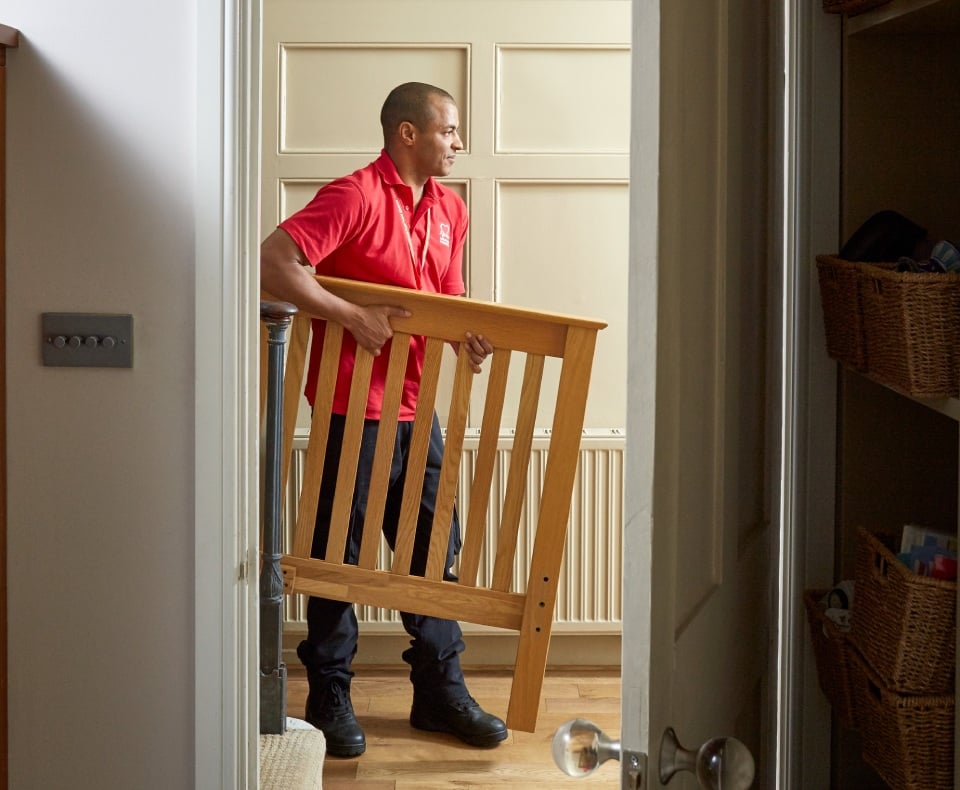
TFP can be relevant on both sides of that transition — as the household moving partner and as the Furniture Exchange collection partner.
Collection of eligible outgrown furniture from the old property and delivery of upgraded furniture to the new home may be coordinated where logistics allow.
Exact timing should always be confirmed with TFP because same-day coordination is not guaranteed.
What Can Be Exchanged?
Children’s furniture follows the same basic Furniture Exchange categories as adult furniture.
Confirmed categories include:
- Beds.
- Wardrobes.
- Mattresses, subject to hygiene requirements.
Bunk beds can also be submitted for assessment, although customers should confirm their specific configuration directly with TFP.
Study desks and study chairs are most likely to fall under the broader “Other furniture” category, but this specific eligibility should be confirmed before assuming they qualify.
The furniture does not need to have been purchased from TFP.
Children’s furniture from other retailers can also be submitted.
Recent Furniture Exchange Maximums
Recent campaign communications have used the following maximum values:
| Category | Recent Campaign Maximum |
|---|---|
| Bed | Up to Rs 2,500 |
| Wardrobe | Up to Rs 3,000 |
| Mattress | Up to Rs 1,500 |
| Other Furniture | Up to Rs 1,500 — applicability to study furniture must be confirmed |
These are recent campaign maximums only. “Up to” is not a guaranteed exchange amount. Actual values depend on assessment and current campaign terms.
Collection Through TFP
Eligible children’s furniture can be collected through TFPunder the Furniture Exchange programme.
Free collection of old furniture. Terms and conditions apply.
Collection is intended to be available island-wide, subject to current campaign terms.
Parents should mention access issues in advance, including:
- Upper-floor bedrooms.
- Narrow staircases.
- Large wardrobes.
- Bunk beds requiring dismantling.
- Other difficult access.
Dismantling should always be confirmed with TFP rather than assumed.
Important: Do not dismantle, sell or discard the furniture before the exchange is formally approved and collection arranged.
Safety Comes Before Exchange Value
Children use furniture differently from adults.
They climb.
They lean.
They hang from rails.
They use furniture dynamically in ways that can expose weaknesses quickly.
Pay attention to:
- Loose bunk-bed rails.
- Damaged bunk-bed ladders.
- Broken bed slats.
- Unstable wardrobes.
- Damaged desk or chair joints.
- Sharp broken edges.
- Furniture tipping risk.
Tall wardrobes in children’s rooms should be appropriately secured against tip-over risk.
If furniture becomes structurally unsafe, stop using it and address replacement or disposal rather than waiting for exchange value.
Back-to-School Is a Natural Time to Reassess the Room
January and school reopening are strong furniture-upgrade moments for children’s rooms.
So is the start of secondary school.
Parents are already thinking about:
- Uniforms.
- Books.
- Stationery.
- Laptops.
- Homework routines.
That makes it a natural time to ask whether the bedroom setup actually supports the next school stage.
A desk-and-chair upgrade should not be viewed as decoration.
It is part of creating a practical environment that fits the child’s current body and study requirements.
Financing the Next Stage
Children’s furniture upgrades — particularly bed-and-mattress combinations or larger wardrobes — can represent a significant household expense.
After an approved exchange value is applied, parents may be able to finance the remaining balance through CIM Finance or Rogers Capital, subject to approval and current terms.
Frequently Asked Questions
Can I exchange my child's old furniture at TFP?
Yes. Eligible children’s beds, wardrobes and mattresses can be submitted under the Furniture Exchange programme when the campaign is active. Other categories such as study desks and chairs should be confirmed directly with TFP.
Can children outgrow furniture even if it is still in good condition?
Yes. Furniture can remain structurally sound while no longer fitting the child physically, functionally or aesthetically. A bed may be too short, a wardrobe too small or a desk too low even though the furniture itself is not worn out.
Does children's furniture need to be from TFP?
No. Children’s furniture purchased from other retailers can also be submitted for assessment.
Does TFP collect old children's furniture?
Eligible old furniture can be collected through TFP under the current Furniture Exchange campaign, subject to programme terms.
Is collection free?
Recent campaign wording includes free collection of old furniture, subject to terms and conditions.
Can collection and new furniture delivery be coordinated?
Collection and delivery can be coordinated where logistics allow, but exact timing and same-day service should be confirmed with TFP for the specific transaction.
Can I finance the remaining balance after exchange?
Parents may typically apply for financing through CIM Finance or Rogers Capital after the exchange value has been applied, subject to approval and current terms.
When should I replace my child's bed?
Consider replacement when the child is physically too tall for the bed, sleeping awkwardly because of its size, or when the frame has become structurally unsafe. Style and room-layout changes can also justify replacement where appropriate.
When does a child need a bigger wardrobe?
A wardrobe upgrade becomes useful when uniforms, everyday clothing, shoes, bags and sports equipment exceed the available capacity and overflow storage begins affecting the rest of the bedroom.
How do I know if my child's study desk is too small?
Common signs include knees hitting the desk, insufficient legroom, desk height that no longer suits the child, and not enough surface area for a laptop, books and stationery at the same time.
What furniture should I upgrade first in a child's room?
Start with the item creating the greatest functional problem. This is often the bed if the child has physically outgrown it, the wardrobe if storage is creating daily clutter, or the desk if the study setup no longer fits.
How can I update a child's room without replacing everything?
Keep good-quality anchor furniture where it still fits, upgrade only the pieces that have genuinely been outgrown, and use bedding, curtains, artwork and accessories to mature the room’s style affordably.
Can I exchange a bunk bed?
Bunk beds can be submitted for exchange assessment, although customers should confirm current eligibility and the handling of their specific configuration directly with TFP.
Can I trade in an old single bed for a larger bed?
Yes. A single-bed-to-larger-bed transition is a practical exchange scenario when the child has genuinely outgrown the current sleeping surface and the room can accommodate the replacement.
Can I exchange a child's wardrobe for a larger wardrobe?
Yes. Moving from a compact child’s wardrobe to a larger or sliding-door wardrobe is one of the most practical storage upgrades as children enter secondary school and the teen years.
Can I exchange children's study furniture?
Study desks and chairs are most likely to fall within the broader “Other furniture” category, but specific eligibility should be confirmed with TFP before assuming an exchange value.
Should I keep old furniture for a younger sibling?
Often, yes. If a younger sibling is likely to use the furniture within a reasonable period and it remains in good condition, keeping it can make more sense than exchanging it and purchasing a similar item later.
Is it better to sell or exchange children's furniture?
Private sale may return more money if the furniture is in excellent condition and has strong resale appeal. Furniture Exchange may be more convenient when the parent is already upgrading and wants the old piece collected without managing a private sale.
What should I do with unsafe children's furniture?
Stop using furniture that has become structurally unsafe and arrange appropriate repair, replacement or disposal. Safety should take priority over waiting for an exchange value.
Can I use Furniture Exchange when moving house?
Yes. Moving is a natural time to assess which children’s furniture is worth taking to the next home and which pieces have already been outgrown.
Let the Furniture Change When the Child Genuinely Needs It To
Children grow faster than furniture plans do.
The bed that fitted perfectly at seven may feel small at thirteen.
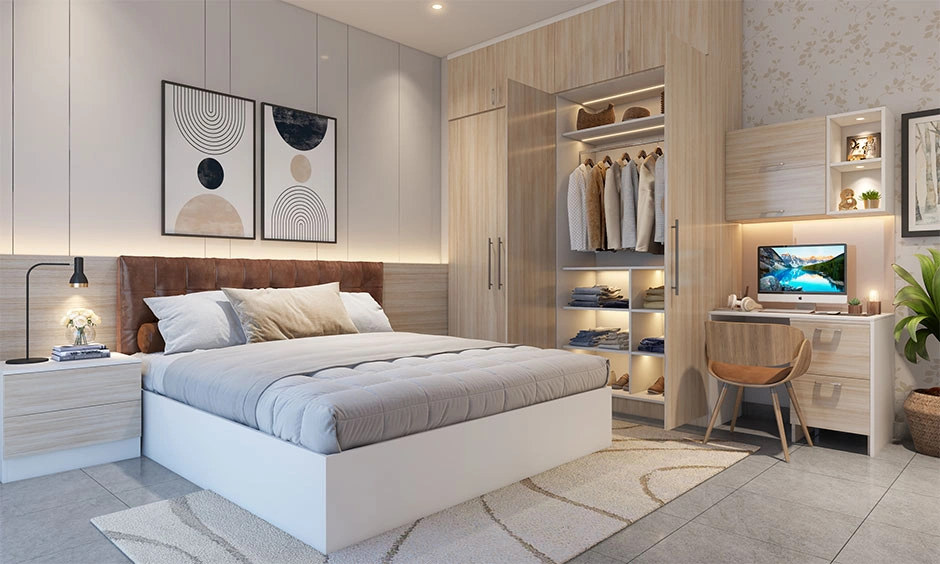
The wardrobe that once held everything may struggle with school uniforms, sportswear and teenage clothes.
The little desk may no longer fit the person using it.
And the room that once reflected a young child may eventually need to feel like a teenager’s space.
The answer is not to replace furniture constantly.
It is to recognise when a piece has genuinely been outgrown.
Children grow faster than furniture plans do.
The bed that fitted perfectly at seven may feel small at thirteen; the wardrobe that once held everything may struggle with school uniforms, sportswear and teenage clothes; the little desk may no longer fit the person using it.
The answer is not to replace furniture constantly, but to recognise when a piece has genuinely been outgrown. Keep it when it still has a purpose, pass it on when someone else can use it, and exchange it when your child is ready for the next stage and the old furniture no longer fits the life happening in the room.
Furniture Exchange operates as a promotional campaign, so availability, exchange values, eligibility conditions, collection arrangements and financing terms may change.
Before proceeding, visit tfp.mu or contact TFP directly to confirm the current Furniture Exchange campaign and applicable terms.
Kids Growing Up Fast? Trade In Their Furniture as They Outgrow It
Children grow quickly — and their furniture needs change with them. From beds and wardrobes to study desks and chairs, here is how to know when furniture has genuinely been outgrown, what to keep, what to pass on, and when TFP Furniture Exchange can help make the next stage easier.
Children’s furniture is unusual.
A sofa may eventually need replacing because it becomes worn.
A dining table may be replaced because its surface is damaged.
But a child’s bed, wardrobe or desk can become unsuitable while still being perfectly usable.
The reason is simple:
Outgrown is not the same as worn out.
A bed may still be structurally sound, but your child’s feet now reach the end.
A compact wardrobe may still open and close perfectly, but school uniforms, PE kits, sportswear, shoes and teenage clothes no longer fit inside.
A little homework desk may still look almost new, but a teenager’s knees now hit the underside while a laptop, textbook and notebook compete for the same small surface.
Children grow physically.
Their study needs grow.
Their storage needs grow.
And, eventually, their idea of what their own room should look like grows too.
The important idea:
Children's furniture is one of the few furniture categories that can become unsuitable even when it is still in usable condition, simply because the child has grown.
That does not mean parents should replace furniture constantly.
Quite the opposite.
Good furniture should be kept, passed down or reused whenever that genuinely makes sense.
But when a piece no longer fits the child, no younger sibling needs it, and there is no useful reason to keep storing it, TFP’s Furniture Exchange programme can help make the transition to the next stage easier.
Children’s Rooms Change in Stages
The easiest way to think about children’s furniture is not as one permanent bedroom setup, but as a room that evolves in stages.
Stage 1 — Early Childhood
In the early years, the room is built around small proportions and simple storage.
Typical furniture may include:
- A cot or first bed.
- A compact wardrobe.
- Low storage.
- Toy storage.
- Simple shelving.
At this stage, everything is relatively small because everything about the child is relatively small.
Stage 2 — Primary School
Around primary-school age, the room begins doing more jobs.
It is still a bedroom, but it is also becoming a study space.
A dedicated desk and chair become useful.
The wardrobe starts working harder.
Books, uniforms, school bags and sports equipment begin appearing in quantities that were not relevant during early childhood.
Stage 3 — Teen Years
The teenage transition is often the biggest furniture shift of all.
The child is physically much larger.
Secondary-school study demands are more serious.
Clothing volume has increased dramatically.
The bedroom often needs to accommodate:
- A larger bed.
- A proper study workstation.
- A more supportive study chair.
- More wardrobe capacity.
- Books, stationery and laptop equipment.
- Personal belongings and hobby items.
And the teenager may no longer identify with the room’s childhood colours, themes or furniture style.
Secondary School Is Often the Biggest Transition Point
One of the clearest moments parents notice that furniture no longer fits is the move into secondary school.
A desk that worked perfectly for short primary-school homework sessions may suddenly feel tiny when it needs to hold:
- A laptop.
- Several textbooks.
- Exercise books.
- Stationery.
- Revision materials.
At the same time, the child may also be reaching the point where the bed feels short and the wardrobe feels cramped.
This is why the secondary-school transition is often the moment when several pieces need reassessment at once.
That does not mean everything has to be replaced together.
A better approach: Identify the most urgently outgrown item first, replace that piece, and upgrade the room gradually as budget and need allow.
The Bed Is Usually the Most Obvious Sign of Growth
A child can sometimes continue using a small desk awkwardly for months.
Storage overflow can also be tolerated for longer than it should.
But a bed that has become physically too small is difficult to ignore.
Common transitions include:
- Cot → first single bed.
- Small child bed → standard single bed.
- Standard single → larger single or double bed.
- Bunk bed → separate individual beds.
Single to Double During the Teen Years
Where room dimensions allow, teenagers often want more sleeping space.
The move from single to double is a common teenage bedroom upgrade.
But “bigger” is not automatically “better.”
A double bed that fills nearly the entire bedroom can make the room less functional than a properly proportioned single bed.
Before upgrading size, measure:
- The room itself.
- Available walking space.
- Doorway width.
- Staircase access.
- Corridors.
- The space required for the desk and wardrobe.
A bed can fit inside a room and still be impossible to deliver there without appropriate access planning.
When Is a Bunk Bed No Longer the Right Solution?
Bunk beds can be extremely practical when two younger children share a room.
But that arrangement may stop making sense when:
- Children want more privacy.
- One child moves into another room.
- Physical size makes the upper bunk uncomfortable.
- The bunk structure has aged or developed safety concerns.
Bunk beds can be submitted for Furniture Exchange assessment, although specific configurations should be confirmed directly with TFP.
Storage Grows Faster Than Parents Expect
A young child can often manage perfectly well with a compact wardrobe.
The clothing is smaller.
There are fewer shoes.
There may be no school uniform, sports kit or large bag collection yet.
Then primary school begins.
Then secondary school begins.
And suddenly the storage problem is visible everywhere except inside the wardrobe.
Common signs include:
- Clothes living permanently on a chair.
- Boxes stacked on top of the wardrobe.
- School bags left on the floor.
- Sports equipment without a proper storage location.
- Clothing pushed so tightly together that finding anything becomes difficult.
A Larger Wardrobe Can Reduce Clutter Without Enlarging the Room
This is one of the most useful upgrades for a growing child’s bedroom.
Replacing a small hinged wardrobe with a larger sliding-door model can increase storage while also improving floor-space efficiency.
Sliding doors do not need clearance in front of the wardrobe.
That matters in compact Mauritian bedrooms where the same room also needs space for a bed, study desk and walking path.
Illustrative Wardrobe Upgrade
Old small wardrobe assessed: Rs 1,800
Illustrative new sliding wardrobe: Rs 22,000
Illustrative balance after exchange: Rs 20,200
Illustrative example only. Actual exchange values depend on the condition, type, size and eligibility of the specific item assessed. Furniture prices are subject to change — visit tfp.mu for current pricing. Exchange values are campaign-specific and subject to confirmation.
The Study Setup Should Grow Too
A desk designed for a 7-year-old may be completely inappropriate for the same child at 13.
The problem is both physical and functional.
Typical signs that a child has outgrown a study setup include:
- Desk height is too low.
- Knees hit the underside.
- The chair is too small.
- There is not enough legroom.
- A laptop takes up almost the entire surface.
- Books and stationery have nowhere to go.
A Simple Ergonomic Check
For a more suitable study position:
- Feet should be supported.
- Elbows should sit at roughly 90 degrees while working.
- Desk height should suit the child’s current body size.
- The screen should sit at a comfortable viewing height.
- The child should be encouraged to move regularly rather than sit in one position for long periods.
This section can internally link to TFP’s article:
What Is Ergonomic Furniture and Why Does It Matter for Your Home in Mauritius?
Study desks and study chairs are most likely assessed under the broader “Other furniture” category, but their specific eligibility should be confirmed directly with TFP before relying on an exchange value.
A Child Can Outgrow the Style Too
Growth is not only physical.
A 14-year-old may technically still fit into the same bed they had at eight, but the bright cartoon-themed furniture may no longer feel like their room.
That is a legitimate transition.
Typical changes include:
- Bright children’s furniture → neutral or wood-toned finishes.
- Toy-heavy room → cleaner, more purposeful layout.
- Small desk → proper workstation.
- Compact child wardrobe → full-size wardrobe.
But parents do not need to replace every piece every time the child’s taste changes.
Cost-conscious approach: Choose timeless anchor furniture — bed, wardrobe and desk — and let bedding, curtains, artwork and accessories carry more of the changing style as the child grows.
Mattress and Bed Frame Are Separate Decisions
The bed frame and mattress do not always need replacement at the same time.
A new mattress may be needed because:
- The new bed frame is a different size.
- The existing mattress has sagged.
- The child has grown taller or heavier.
- The mattress no longer feels adequately supportive or comfortable.
- The mattress has simply reached an age or hygiene condition where replacement makes practical sense.
The language here should remain practical rather than medical.
The goal is simply a mattress that is the right size, comfortable and appropriately supportive for the teenager using it.
Parents upgrading a teenager’s sleep setup can also consider TFP’s Royal Lux mattress range, depending on current model availability.
Children’s mattresses follow the same Furniture Exchange hygiene requirements as adult mattresses. Heavy mould, pest infestation and severe contamination can make an item ineligible.
Watch: From Child’s Room to Teen Room
See how the same bedroom can evolve from early-childhood furniture to a teenager-ready setup with a larger bed, more storage and a proper study area.
A Realistic Example: From Age 7 to Age 13
Imagine the same child in the same bedroom six years apart.
At Age 7
The room works perfectly.
- Small single bed.
- Compact 2-door wardrobe.
- Small primary-school desk.
- Bright, child-oriented furniture style.
Nothing feels missing.
At Age 13
Almost every requirement has changed.
The child is visibly taller.
The bed feels short.
The wardrobe is overflowing with:
- Secondary-school uniforms.
- PE clothes.
- Casual clothing.
- Shoes.
- Bags.
- Sportswear.
The old desk now causes practical problems.
Knees hit the underside.
A laptop nearly fills the entire surface.
There is nowhere to open a textbook beside it.
And visually, the child no longer identifies with the furniture style.
The Better Upgrade
The answer does not have to be a complete room replacement in one weekend.
A staged approach might look like:
- Bed first if physical size is the immediate issue.
- Wardrobe next if storage is creating daily clutter.
- Study desk and chair as school requirements increase.
- Accessories last to mature the room’s style without unnecessarily replacing good furniture.
Illustrative Bed Upgrade
Old single bed assessed: Rs 1,500
Illustrative larger bed: Rs 12,000
Illustrative balance after exchange: Rs 10,500
Illustrative example only. Actual exchange values depend on the condition, type, size and eligibility of the specific item assessed. Furniture prices are subject to change — visit tfp.mu for current pricing. Exchange values are campaign-specific and subject to confirmation.
What Should You Do With the Furniture They Outgrow?
Furniture Exchange is only one option.
For children’s furniture especially, there are often better alternatives.
KEEP IT
Keep the furniture if a younger sibling will use it soon, it still has a genuine role somewhere else in the home, or it carries real sentimental value and you have space to store it properly.
PASS IT ON
Pass it to a cousin, niece, nephew, family friend or another child who genuinely needs it. Passing children’s furniture through the extended family is a natural and common second life for good-condition furniture in Mauritius.
SELL IT
Private sale can make sense if the furniture is in genuinely excellent condition, has strong resale appeal and you have the time to photograph, advertise and manage the transaction.
EXCHANGE IT
Furniture Exchange may make sense when the child has genuinely outgrown the piece, no younger sibling needs it, nobody else in the family can use it, the item remains eligible and independent collection would be inconvenient.
DISPOSE OF IT
Disposal is the right route when the furniture is structurally unsafe, severely damaged, heavily mouldy, pest-infested or otherwise unsuitable for continued use.
Exchange Now or Save It for the Next Child?
This is one of the most important decisions for families with more than one child.
A perfectly good bed or wardrobe may be worth far more to a younger sibling than its exchange value.
Before exchanging, consider:
- Age gap: Will the younger sibling need it within one or two years, or would it need storing for much longer?
- Condition: Will it still be appropriate when the next child is ready?
- Storage space: Can the furniture be kept without creating another household problem?
- Likelihood of use: Will the younger sibling genuinely need that particular item?
- Future moves: Will keeping it mean paying to move and store something for several years?
If the younger sibling is likely to use it soon, keeping the furniture is often the better decision.
Children Grow Quickly — But Sentimental Furniture Still Matters
A first bed can carry memories.
So can a bunk bed shared by siblings.
Or the small desk where years of homework happened.
There is nothing wrong with keeping a meaningful piece if the family has the space and genuinely wants to keep it.
Children outgrow furniture quickly, but that does not mean every piece has to disappear the moment they grow.
Moving House Is the Perfect Time for a Furniture Audit
Moving naturally forces families to ask what belongs in the next home.
For children’s furniture, this matters because growth is predictable.
If you already know that the small desk will need replacing for secondary school, moving it to the new house only to replace it six months later may make little sense.
Do not pay to move furniture you already know your child has outgrown and you intend to replace.
TFP can be relevant on both sides of that transition — as the household moving partner and as the Furniture Exchange collection partner.
Collection of eligible outgrown furniture from the old property and delivery of upgraded furniture to the new home may be coordinated where logistics allow.
Exact timing should always be confirmed with TFP because same-day coordination is not guaranteed.
What Can Be Exchanged?
Children’s furniture follows the same basic Furniture Exchange categories as adult furniture.
Confirmed categories include:
- Beds.
- Wardrobes.
- Mattresses, subject to hygiene requirements.
Bunk beds can also be submitted for assessment, although customers should confirm their specific configuration directly with TFP.
Study desks and study chairs are most likely to fall under the broader “Other furniture” category, but this specific eligibility should be confirmed before assuming they qualify.
The furniture does not need to have been purchased from TFP.
Children’s furniture from other retailers can also be submitted.
Recent Furniture Exchange Maximums
Recent campaign communications have used the following maximum values:
| Category | Recent Campaign Maximum |
|---|---|
| Bed | Up to Rs 2,500 |
| Wardrobe | Up to Rs 3,000 |
| Mattress | Up to Rs 1,500 |
| Other Furniture | Up to Rs 1,500 — applicability to study furniture must be confirmed |
These are recent campaign maximums only. “Up to” is not a guaranteed exchange amount. Actual values depend on assessment and current campaign terms.
Collection Through TFP
Eligible children’s furniture can be collected through TFPunder the Furniture Exchange programme.
Free collection of old furniture. Terms and conditions apply.
Collection is intended to be available island-wide, subject to current campaign terms.
Parents should mention access issues in advance, including:
- Upper-floor bedrooms.
- Narrow staircases.
- Large wardrobes.
- Bunk beds requiring dismantling.
- Other difficult access.
Dismantling should always be confirmed with TFP rather than assumed.
Important: Do not dismantle, sell or discard the furniture before the exchange is formally approved and collection arranged.
Safety Comes Before Exchange Value
Children use furniture differently from adults.
They climb.
They lean.
They hang from rails.
They use furniture dynamically in ways that can expose weaknesses quickly.
Pay attention to:
- Loose bunk-bed rails.
- Damaged bunk-bed ladders.
- Broken bed slats.
- Unstable wardrobes.
- Damaged desk or chair joints.
- Sharp broken edges.
- Furniture tipping risk.
Tall wardrobes in children’s rooms should be appropriately secured against tip-over risk.
If furniture becomes structurally unsafe, stop using it and address replacement or disposal rather than waiting for exchange value.
Back-to-School Is a Natural Time to Reassess the Room
January and school reopening are strong furniture-upgrade moments for children’s rooms.
So is the start of secondary school.
Parents are already thinking about:
- Uniforms.
- Books.
- Stationery.
- Laptops.
- Homework routines.
That makes it a natural time to ask whether the bedroom setup actually supports the next school stage.
A desk-and-chair upgrade should not be viewed as decoration.
It is part of creating a practical environment that fits the child’s current body and study requirements.
Financing the Next Stage
Children’s furniture upgrades — particularly bed-and-mattress combinations or larger wardrobes — can represent a significant household expense.
After an approved exchange value is applied, parents may be able to finance the remaining balance through CIM Finance or Rogers Capital, subject to approval and current terms.
Frequently Asked Questions
Can I exchange my child's old furniture at TFP?
Yes. Eligible children’s beds, wardrobes and mattresses can be submitted under the Furniture Exchange programme when the campaign is active. Other categories such as study desks and chairs should be confirmed directly with TFP.
Can children outgrow furniture even if it is still in good condition?
Yes. Furniture can remain structurally sound while no longer fitting the child physically, functionally or aesthetically. A bed may be too short, a wardrobe too small or a desk too low even though the furniture itself is not worn out.
Does children's furniture need to be from TFP?
No. Children’s furniture purchased from other retailers can also be submitted for assessment.
Does TFP collect old children's furniture?
Eligible old furniture can be collected through TFP under the current Furniture Exchange campaign, subject to programme terms.
Is collection free?
Recent campaign wording includes free collection of old furniture, subject to terms and conditions.
Can collection and new furniture delivery be coordinated?
Collection and delivery can be coordinated where logistics allow, but exact timing and same-day service should be confirmed with TFP for the specific transaction.
Can I finance the remaining balance after exchange?
Parents may typically apply for financing through CIM Finance or Rogers Capital after the exchange value has been applied, subject to approval and current terms.
When should I replace my child's bed?
Consider replacement when the child is physically too tall for the bed, sleeping awkwardly because of its size, or when the frame has become structurally unsafe. Style and room-layout changes can also justify replacement where appropriate.
When does a child need a bigger wardrobe?
A wardrobe upgrade becomes useful when uniforms, everyday clothing, shoes, bags and sports equipment exceed the available capacity and overflow storage begins affecting the rest of the bedroom.
How do I know if my child's study desk is too small?
Common signs include knees hitting the desk, insufficient legroom, desk height that no longer suits the child, and not enough surface area for a laptop, books and stationery at the same time.
What furniture should I upgrade first in a child's room?
Start with the item creating the greatest functional problem. This is often the bed if the child has physically outgrown it, the wardrobe if storage is creating daily clutter, or the desk if the study setup no longer fits.
How can I update a child's room without replacing everything?
Keep good-quality anchor furniture where it still fits, upgrade only the pieces that have genuinely been outgrown, and use bedding, curtains, artwork and accessories to mature the room’s style affordably.
Can I exchange a bunk bed?
Bunk beds can be submitted for exchange assessment, although customers should confirm current eligibility and the handling of their specific configuration directly with TFP.
Can I trade in an old single bed for a larger bed?
Yes. A single-bed-to-larger-bed transition is a practical exchange scenario when the child has genuinely outgrown the current sleeping surface and the room can accommodate the replacement.
Can I exchange a child's wardrobe for a larger wardrobe?
Yes. Moving from a compact child’s wardrobe to a larger or sliding-door wardrobe is one of the most practical storage upgrades as children enter secondary school and the teen years.
Can I exchange children's study furniture?
Study desks and chairs are most likely to fall within the broader “Other furniture” category, but specific eligibility should be confirmed with TFP before assuming an exchange value.
Should I keep old furniture for a younger sibling?
Often, yes. If a younger sibling is likely to use the furniture within a reasonable period and it remains in good condition, keeping it can make more sense than exchanging it and purchasing a similar item later.
Is it better to sell or exchange children's furniture?
Private sale may return more money if the furniture is in excellent condition and has strong resale appeal. Furniture Exchange may be more convenient when the parent is already upgrading and wants the old piece collected without managing a private sale.
What should I do with unsafe children's furniture?
Stop using furniture that has become structurally unsafe and arrange appropriate repair, replacement or disposal. Safety should take priority over waiting for an exchange value.
Can I use Furniture Exchange when moving house?
Yes. Moving is a natural time to assess which children’s furniture is worth taking to the next home and which pieces have already been outgrown.
Let the Furniture Change When the Child Genuinely Needs It To
Children grow faster than furniture plans do.
The bed that fitted perfectly at seven may feel small at thirteen.
The wardrobe that once held everything may struggle with school uniforms, sportswear and teenage clothes.
The little desk may no longer fit the person using it.
And the room that once reflected a young child may eventually need to feel like a teenager’s space.
The answer is not to replace furniture constantly.
It is to recognise when a piece has genuinely been outgrown.
Children grow faster than furniture plans do.
The bed that fitted perfectly at seven may feel small at thirteen; the wardrobe that once held everything may struggle with school uniforms, sportswear and teenage clothes; the little desk may no longer fit the person using it.
The answer is not to replace furniture constantly, but to recognise when a piece has genuinely been outgrown. Keep it when it still has a purpose, pass it on when someone else can use it, and exchange it when your child is ready for the next stage and the old furniture no longer fits the life happening in the room.
Furniture Exchange operates as a promotional campaign, so availability, exchange values, eligibility conditions, collection arrangements and financing terms may change.
Before proceeding, visit tfp.mu or contact TFP directly to confirm the current Furniture Exchange campaign and applicable terms.