How to Mix Old and New Furniture Without It Looking Mismatched
A practical styling guide for Mauritian homes built piece by piece: coordinating traditional, inherited and modern furniture with confidence.
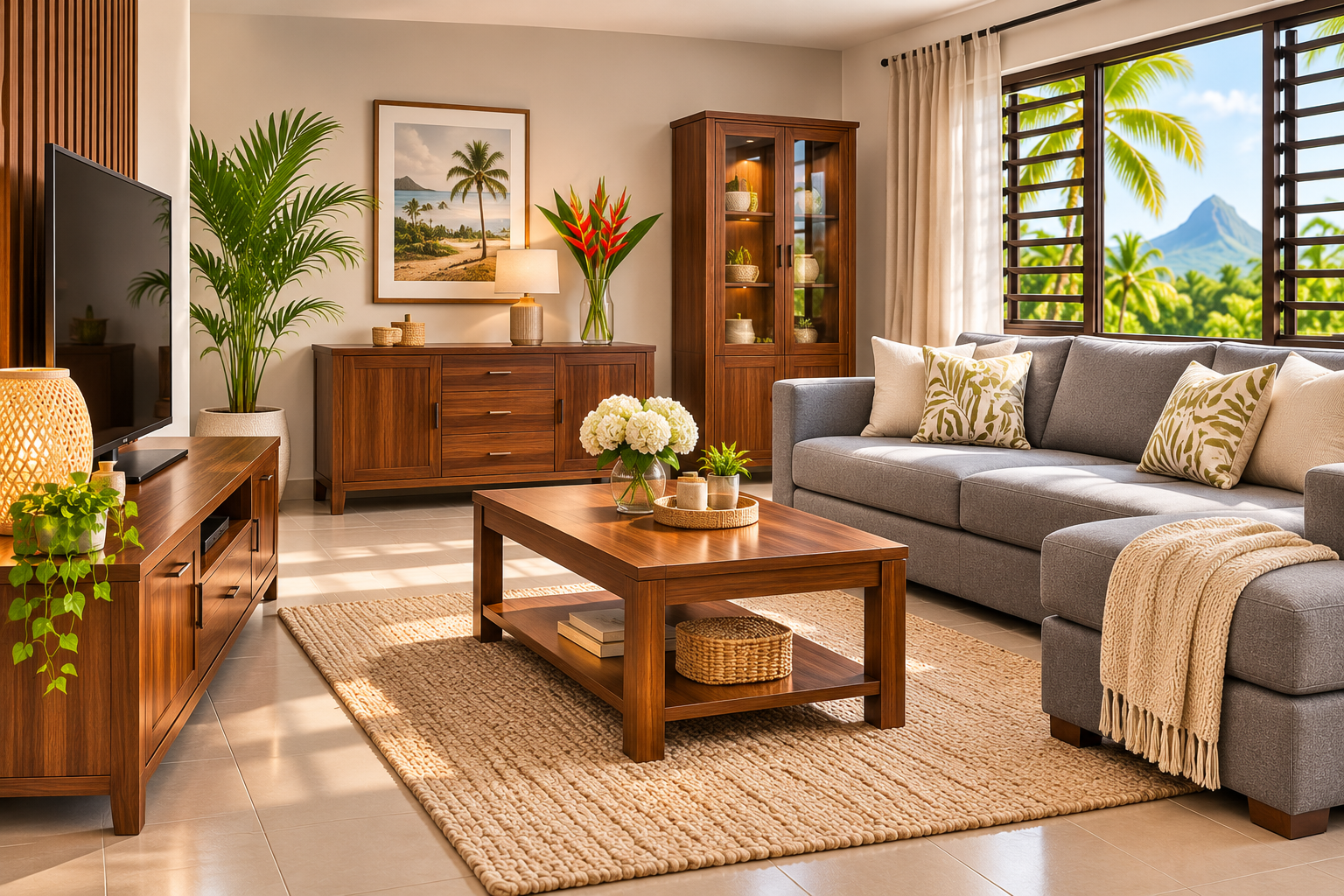
Traditional walnut, a modern grey sofa and a warm rug to connect them.
Most TFP customers aren't furnishing a room from scratch. They're replacing one piece, usually the sofa, wardrobe or dining set, while keeping everything else. A new grey sofa beside an existing dark wooden TV unit and carved coffee table is one of the most common situations we see.
Many customers worry the new piece will look out of place. Some even put off an upgrade they'd really benefit from, or feel they have to replace a whole set when only one piece needs changing. You don't.
Mixing furniture styles is increasingly popular, especially among younger Mauritian homeowners, and gradual upgrading is a sensible, budget-friendly way to furnish a home. This guide shows you how to make old and new pieces look like they belong together.
What Mixing Old and New Furniture Means
Mixing old and new furniture means combining existing, inherited, traditional or older pieces with contemporary ones to create a coordinated room without replacing everything. "Old" can mean several things:
- Older furniture in good condition
- Antiques with genuine historical value
- Vintage pieces from a particular design era
- Traditional furniture in Mauritius's classic wooden styles
- Furniture from different collections bought at different times
Old doesn't mean outdated or poor quality. Many older pieces, with solid wood and traditional joinery, are better made than budget modern alternatives. A well-kept older piece can even become the most distinctive feature of a modern room. Mixing styles doesn't mean ignoring design principles, though. It means using them thoughtfully.
Why Mauritian Homes Naturally Mix Furniture
- Furniture is bought gradually. Most households upgrade one piece at a time over many years.
- Furniture is inherited. Heavy wooden dining tables, display cabinets and wardrobes are often passed down from parents and grandparents.
- Sentiment matters. Keeping a piece because it means something to your family is a perfectly good reason.
- Quality is worth keeping. Many families keep traditional wooden pieces simply because they're so well made.
- Furniture moves around. A dining chair becomes a bedroom chair; a living room cabinet moves to the hallway.
A grey sofa, a walnut TV unit and a traditional coffee table in one room is very common, and it can look beautiful with the right coordination. Replacing everything at once isn't practical for most families. Gradual upgrading isn't a compromise; it's often the better way to build a home.
Step 1: Choose a Leading Style
Common directions include:
- Contemporary: clean lines and a calm, current feel
- Scandinavian: light woods, soft neutrals and simplicity
- Traditional: rich wood, classic shapes and detail
- Warm family-home: relaxed, comfortable and welcoming
- Hotel-inspired luxury: polished, layered and elegant
- Transitional: the bridge between traditional and contemporary
- Eclectic: many styles mixed freely, which takes a confident eye
Why Transitional Style Matters Here
Transitional style is made for this exact situation. It pairs clean-lined contemporary pieces with traditional ones, linked by a neutral palette and shared warmth. It's ideal for combining traditional wooden furniture with modern upholstered sofas.
Transitional is different from eclectic. Transitional deliberately bridges two styles; eclectic draws from many styles without one clear bridge. Both can work, but they need different approaches.
Decide whether your room will be mainly modern with traditional touches or mainly traditional with modern touches. That choice guides everything else. One traditional statement piece usually works better in a modern room than several. These aren't strict categories you must follow, just a helpful direction.
Step 2: Balance the Styles (the 70/30 Guide)
For Mauritian family homes, a roughly 70/30 balance works well: about 70% of one style and 30% of the other. That's enough for the room to feel genuinely mixed, not just a single token accent.
- Keep the largest pieces (sofa, bed, wardrobe or dining table) in the leading style.
- Use smaller furniture and accessories to bring in the contrasting style.
- This is a visual guide, so there's no need to count pieces.
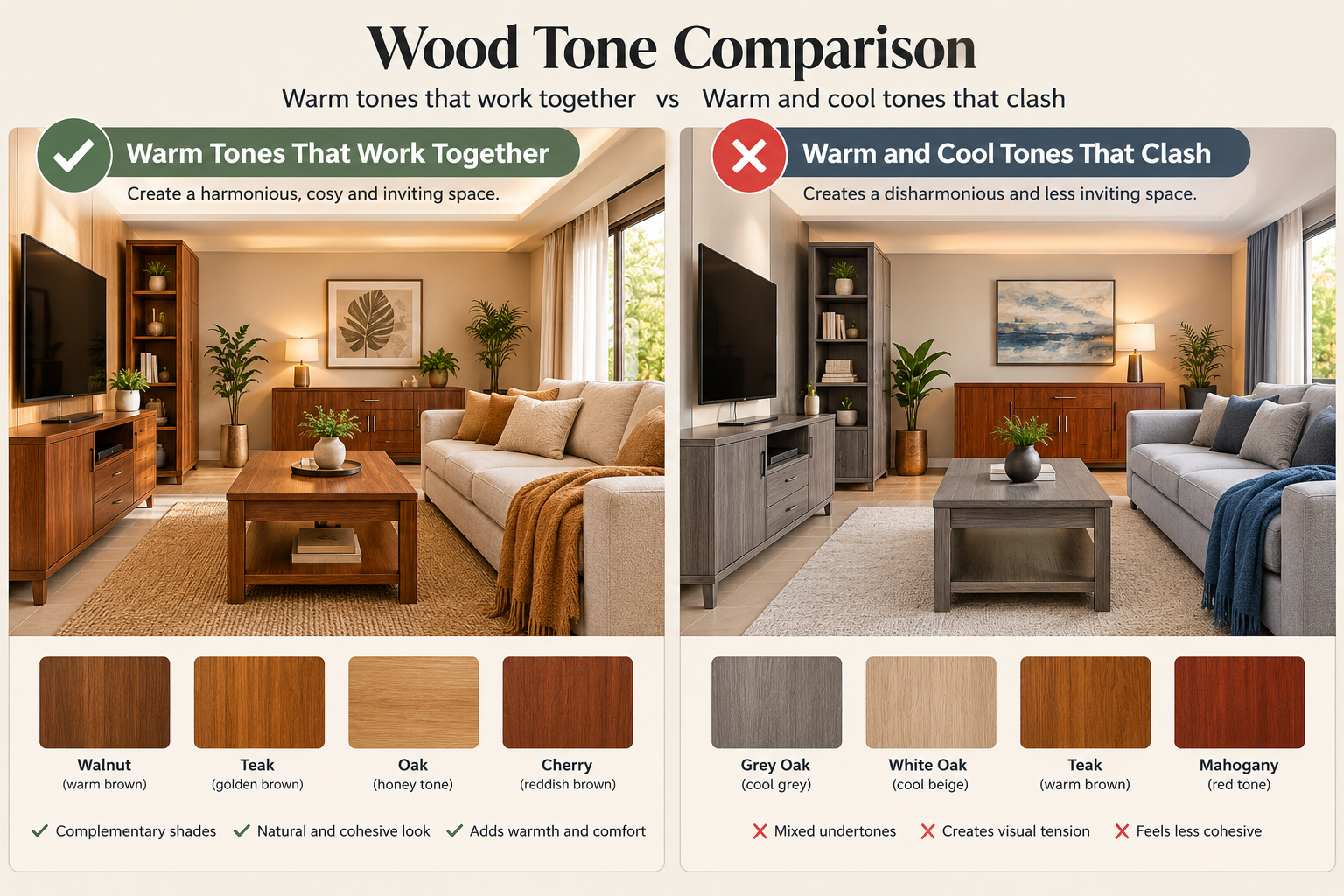
Warm with warm reads as intentional; warm with cool needs a bridge.
Step 3: Coordinate Your Colours
Colour is the most powerful and affordable tool for linking mixed furniture. The most common challenge is coordinating a new sofa with older wooden pieces.
- Common existing wood colours: dark walnut, honey oak, wenge, cinnamon or reddish brown, natural oak and white
- Popular TFP sofa colours today: grey (the most common), beige and greige, cream, warm brown and olive (growing in popularity)
The 60-30-10 Guide
- 60% main neutral: walls and the main sofa
- 30% secondary: curtains, rug and secondary furniture
- 10% accent: cushions, a plant or a lampshade
Example: grey sofa + walnut TV unit + cream cushions + warm neutral rug.
A common mistake is using too many accent colours. Instead, repeat one colour in several places around the room. That repetition is what makes pieces look connected.
For more colour ideas, read How to Use Colour Psychology to Choose Furniture for Each Room.
Step 4: Mix Wood Finishes Intentionally
Mixing wood finishes is the most common coordination challenge in Mauritian homes. The most useful idea to understand is undertone:
- Warm tones (honey, cinnamon, walnut, medium oak) generally work well together.
- Cool tones (grey-washed oak, white, dark ebonised finishes) generally work well together.
- Mixing warm and cool without a bridge creates visual tension.
| Combination | How it works |
|---|---|
| Oak + walnut | Both warm, so generally compatible |
| Cinnamon + walnut | Same warm family, so generally compatible |
| Light oak + dark walnut | Attractive contrast when it looks deliberate |
| Honey oak + wenge | High contrast; can work if clearly intentional |
| Dark brown + white | High contrast; works as a deliberate choice |
| Natural oak + grey-washed oak | Warm vs cool, so it can clash without a bridge |
Making Different Woods Work
- Repeat each wood tone at least twice where you can. If your coffee table is honey oak, a wooden tray or lamp base in a similar tone makes it look deliberate.
- Small accessories can echo the tone of a large piece.
- You don't need to match the grain.
- Avoid "almost matching". Trying to match an old finish that's no longer available rarely works, and a near-miss looks like a mistake. Clear contrast looks like a choice.
Traditional Wooden Furniture With a Modern Sofa
This is the most common scenario at TFP: a carved wooden coffee table or walnut TV unit with a new grey or beige sofa. It can look wonderful.
- Neutral upholstery balances ornate wood. A calm sofa lets the wood's character shine without competing.
- Avoid a visually heavy room. Dark wood plus a dark sofa can feel oppressive, so lighter upholstery, curtains and walls give breathing space.
- Make the coffee table the star. Treat a traditional coffee table as the room's statement piece, not a leftover.
- Keep surroundings simple. Detailed, carved furniture doesn't need lots of ornate objects around it.
Before
Traditional walnut furniture and a new grey sofa that look disconnected, competing for attention with nothing linking them.
After
Same furniture, plus cream cushions on the grey sofa, a warm neutral rug, simpler lighting and a wooden tray on the coffee table repeating the walnut tone. The room now looks planned.
Mixing Modern Furniture With Inherited Pieces
Many Mauritian families keep furniture with sentimental value, especially heavy wooden dining tables, display cabinets and bedroom furniture from parents or grandparents. Sentimental value is a perfectly good reason to keep a piece, even if it doesn't follow current trends.
- Make it the focal point. An inherited wooden cabinet can anchor a contemporary living room.
- Pair antiques with modern chairs. An antique dining table with modern upholstered chairs is one of the most successful combinations in interior design.
- Give it space. Don't crowd an ornate piece with other statement furniture. One strong piece anchors a room; several compete.
- Refresh it gently. Cleaning, waxing, repolishing or touching up marks can help an older piece fit in beautifully.
How to Mix Old and New Furniture Without It Looking Mismatched
Proportion and Scale
A very large traditional coffee table beside a compact modern sofa immediately looks accidental, even when the colours work. Height, width and visual weight all matter.
Visual weight describes how heavy, dominant or attention-grabbing a piece looks in a room. Dark, bulky furniture looks heavier than slim, light-coloured furniture of the same size. To balance a heavy wooden cabinet, choose lighter upholstered pieces that still have enough presence, through size, colour or design, not to be overpowered.
- Measure your existing pieces before buying new ones.
- Photograph the room from several angles to judge proportions.
- Check the new sofa suits your existing coffee table and TV unit in size.
Shapes, Lines and Furniture Legs
Straight-lined modern furniture and curved traditional pieces can work together when size, colour and placement are balanced.
- Echo a shape. If your traditional coffee table has curved legs, a round mirror, rounded lamp or curved cushion elsewhere creates a visual link.
- Use straight-lined accessories to connect traditional furniture with a modern sofa.
- Watch the legs. A slim-legged modern sofa can look disconnected beside very bulky traditional cabinets. You don't need matching legs, but in-between pieces help bridge the extremes.
Balancing visual weight matters more than matching exact shapes.
Mixing Materials
Mixing materials adds interest. A room where everything is the same material can feel flat. Combinations that work well:
- Wood + metal: the most versatile modern mix. A metal-frame coffee table can sit nicely beside an older wooden TV unit.
- Wood + glass: a classic pairing
- Wood + fabric: the most common combination in homes
- Metal + marble-look ceramic: a contemporary dining look, softened by wooden accents. A marble-look dining table can also coordinate with a wooden sideboard.
- PU leather + wood: a classic Mauritian living room pairing
- Upholstered fabric + glass
Repeat at least one material elsewhere in the room. Black metal chair legs that echo black cabinet handles or light fittings are one of the cheapest and most effective coordination tricks. Avoid too many unrelated materials in a small room.
Mixing Upholstery Fabrics
Textures can differ as long as the colours coordinate. A fabric sofa can work with PU leather armchairs, and a velvet accent chair can sit beside a linen-look sofa in the same colour family.
A grey fabric sofa with brown PU leather chairs is common in Mauritian homes. Make it look intentional with cushions in a warm neutral that echoes the brown, or a rug that picks up both tones.
Think about the climate too. Heavy velvet in a room without air-conditioning looks heavy and feels warm, so breathable fabrics are usually more comfortable. Remember that different fabrics need different care. See The Complete Guide to Sofa Fabrics.
Cushions, Rugs and Curtains: Your Best Connecting Tools
Accessories are the most affordable, flexible and easy-to-change way to link old and new furniture.
- Cushions: choose colours that reference both the new sofa and the older wood. A warm amber-cream cushion beside a grey sofa and walnut cabinet bridges the two beautifully.
- Rugs: a rug defines the seating area and makes unrelated pieces feel grouped. Size it based on where the furniture sits.
- Curtains: neutral curtains soften the contrast between styles. Heavy patterns add a third competing element when the furniture already needs careful balancing.
Lighting and Visual Balance
Lighting changes how wood and fabric colours look together. Warm, amber-toned light makes warm wood tones look richer and more connected; cool daylight-toned bulbs can make them look more varied and disjointed.
- Add lamps. Most Mauritian living rooms rely on one central ceiling light, which gives flat, even light. Table and floor lamps create warm pools of light that make furniture groupings feel planned.
- Keep one colour temperature in each room. Mixing warm and cool bulbs looks inconsistent.
- Light dark pieces. A lamp beside a dark cabinet reveals its grain and warmth instead of just its bulk.
- Use mirrors to reflect light and balance dark traditional furniture, but position them to avoid strong sunlight glare.
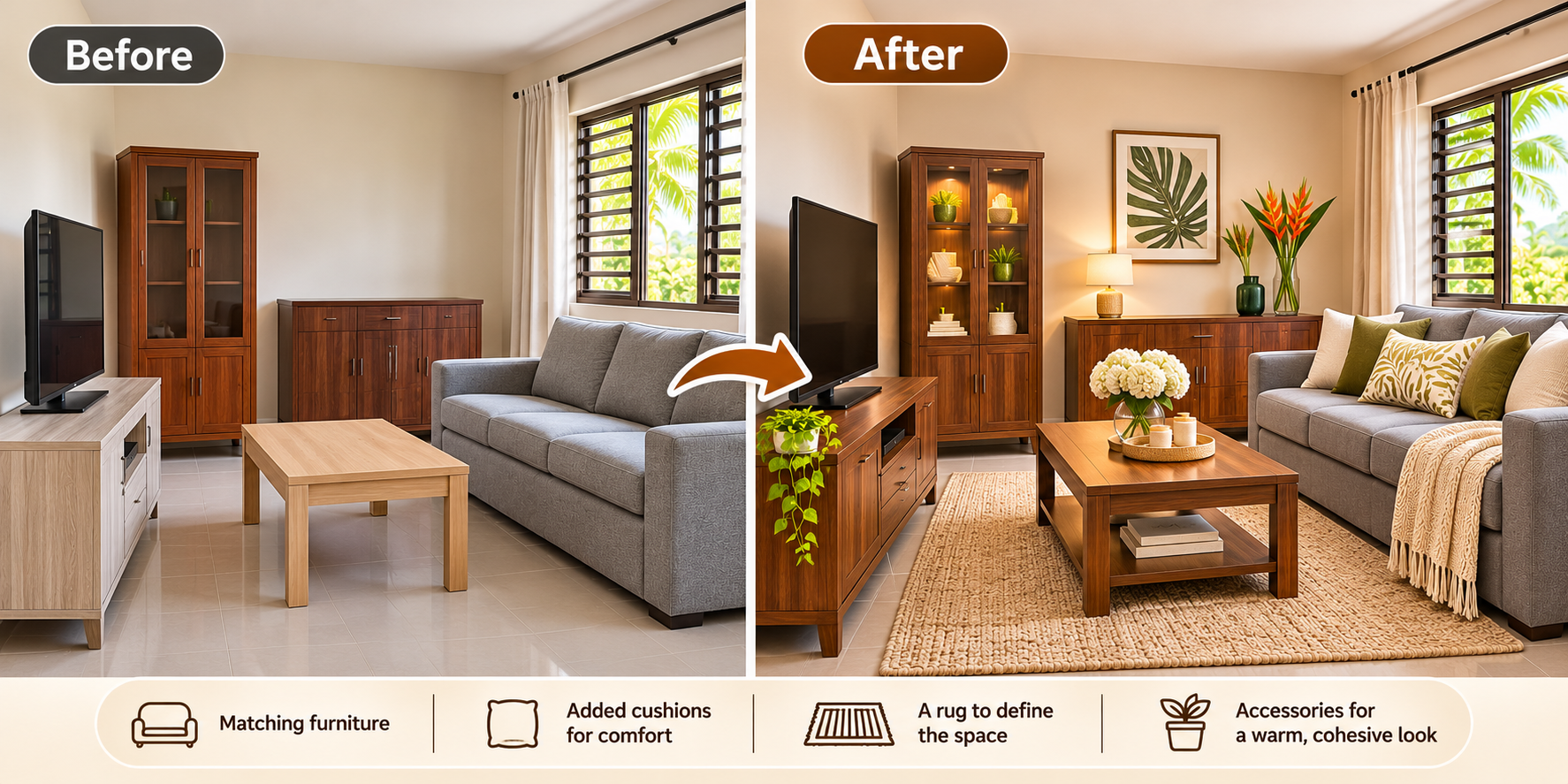
Same furniture, coordinated accessories: from accumulated to composed.
Living Room Combinations
Replacing the sofa while keeping everything else is the most common living room upgrade at TFP. Typical combinations include:
- New sofa + existing coffee table
- New sofa + existing TV unit
- Traditional cabinet + modern sofa
- Modern L-shaped sofa + inherited sideboard
- Different armchairs + existing sofa
- Choose one dominant piece, usually the sofa, sometimes an inherited cabinet, and let the others support it.
- Pick your sofa colour based on what you already own. Bring photos of your coffee table and TV unit to TFP.
- Watch out for large L-shaped sofas. They can overpower smaller traditional furniture, so choose a lighter, neutral tone to reduce their visual weight.
- Coffee tables and TV units don't need to match, but they should coordinate.
Read more in Does Living Room Furniture Have to Match? The Mauritian Home Guide.
Dining Room Combinations
Replacing dining chairs while keeping the table is one of the most common dining upgrades at TFP.
- Modern upholstered chairs + traditional wooden table: a beautiful contrast. For example, an old walnut table with modern beige upholstered chairs.
- Wooden chairs + marble-look table: works when the chair wood matches other wood in the room.
- Let the table lead: the table can be the traditional anchor while the chairs bring in modern style.
- Sideboards: link a sideboard and table in different finishes through shared colours, a repeated material or accessories.
Chairs don't need to match the table's material, but check height, comfort and proportion before looks. A beautiful chair that doesn't fit under the table or isn't comfortable for a long meal is a poor choice. Compare table materials in Marble Dining Table vs Wood Dining Table: Which Is Right for Mauritius?
Bedroom Combinations
Buying a new bed while keeping an existing wardrobe is one of the most common bedroom upgrades.
- A modern upholstered bed can work with an older wooden wardrobe when bedding, curtains and accessories link them.
- Bedding and curtains are your best connectors. Shared colours across both create continuity.
- A white or beige bed frame works well with walnut furniture, keeping the room from feeling heavy while the walnut anchors it.
- Bedside tables don't need to match. Two different ones can look intentional if they share a colour family or material, like one natural wood and one painted to echo the bedding.
When does asymmetry work? When the two pieces share at least one thing (colour, material or design style), it looks like a styling choice. Without that link, it looks like an accident.
8 Common Mixing Mistakes
- Choosing a new piece without thinking about what it will sit beside. Judge it against photos of your room, not in isolation in the showroom.
- Too many wood tones. Three or more finishes with nothing linking them.
- No repeated colour. Every piece in its own colour family.
- Mismatched proportions. Size differences that throw the room off balance.
- Competing statement pieces. Several dominant pieces fighting for attention.
- Accidentally mixing warm and cool woods. Honey oak beside grey-washed oak with no bridge.
- Over-decorating around detailed furniture. Making an already busy room busier.
- Almost-matching instead of contrasting. A near-match looks like a mistake; clear contrast looks like a choice.
When Mixing Doesn't Work
To be honest, sometimes a piece can't be saved with styling. Consider replacing it when:
- It's so worn that nothing new looks right beside it
- The colour difference is too extreme for accessories to bridge
- The size difference makes the pieces look like they belong in different rooms
- Its style is so dominant that it overwhelms any modern addition
See real transformations in Before and After: How TFP's Furniture Exchange Transformed Mauritian Homes, plan a bigger refresh with How to Redesign Your Home: A Step-by-Step Guide, or learn how tone affects space in Dark Furniture vs Light Furniture: Which Makes a Room Feel Bigger?
Closing Thoughts
Your furniture does not need to match perfectly to look beautiful together. The secret is creating a visual connection through colour, materials, proportions and a consistent design direction.
A walnut cabinet inherited from your parents, a new grey sofa from TFP and a warm rug chosen to connect them can create a living room that feels more personal than any perfectly matched furniture set, because it reflects the way your home was actually built, piece by piece, choice by choice.
The goal is not to make your furniture look like it all arrived on the same day. It is to make it look like it was always meant to be together.
Frequently Asked Questions
The Basics
Can old and new furniture look good together?
Yes. Old and new furniture look good together when they share a visual connection through colour, wood tone, materials, proportion and one leading style.
Do I need to replace my whole furniture set when buying one new piece?
No. Most TFP customers upgrade one piece at a time. With good coordination, a single new piece can sit comfortably alongside your existing furniture.
What is transitional interior style?
Transitional style bridges traditional and contemporary design, pairing clean-lined modern pieces with traditional ones through a neutral palette and shared warmth.
What is the 70/30 rule for mixing furniture styles?
It's a visual guide where about 70% of the room follows one leading style and about 30% adds a contrasting style, mainly through smaller pieces and accessories.
Colour and Wood
What sofa colour goes with dark wooden furniture?
Neutral colours like grey, beige, greige and cream work well with dark wood, keeping the room light and letting the wood stand out.
Can I mix different wood finishes in one room?
Yes. Keep to woods with similar undertones where possible, repeat each tone at least twice, and make any contrast look deliberate.
Do oak and walnut go together?
Yes. Oak and walnut both have warm undertones, so they generally work well together, and light oak with dark walnut makes an attractive contrast.
Should I try to match my new furniture to an old wood finish?
Usually not. Exact matches to older finishes are rarely possible, and an almost-match can look like a mistake. A clear, intentional contrast usually looks better.
Pieces and Rooms
Can a modern sofa work with a traditional wooden coffee table?
Yes. Choose neutral upholstery, keep the surroundings simple and treat the coffee table as the room's statement piece.
Can I use modern chairs with an old wooden dining table?
Yes. Modern upholstered chairs with a traditional wooden table is one of the most successful mixing combinations. Check height and comfort first.
Do my bedside tables need to match?
No. Different bedside tables can look intentional if they share a colour family, material or design detail.
How do I make inherited furniture work in a modern home?
Make it the focal point, give it space, keep nearby pieces simple and connect it to the room with colour and accessories. Seek professional advice before refinishing valuable antiques.
Practical Tips
What is the easiest way to connect old and new furniture?
Accessories. Cushions, a rug and curtains in colours that reference both the old and new pieces can pull a room together without buying new furniture.
Does lighting affect how mixed furniture looks?
Yes. Warm lighting makes warm wood tones look richer and more connected, and adding lamps instead of relying on one ceiling light makes a room feel more cohesive.
What should I bring to TFP when buying a new piece?
Bring photographs and measurements of the furniture the new piece will sit beside, such as your coffee table and TV unit, so our team can help you coordinate.
When should I replace a piece instead of mixing it?
Consider replacing it when it's badly worn, or when its colour, size or style difference is too extreme to bridge. TFP Furniture Exchange can help make replacement easier.
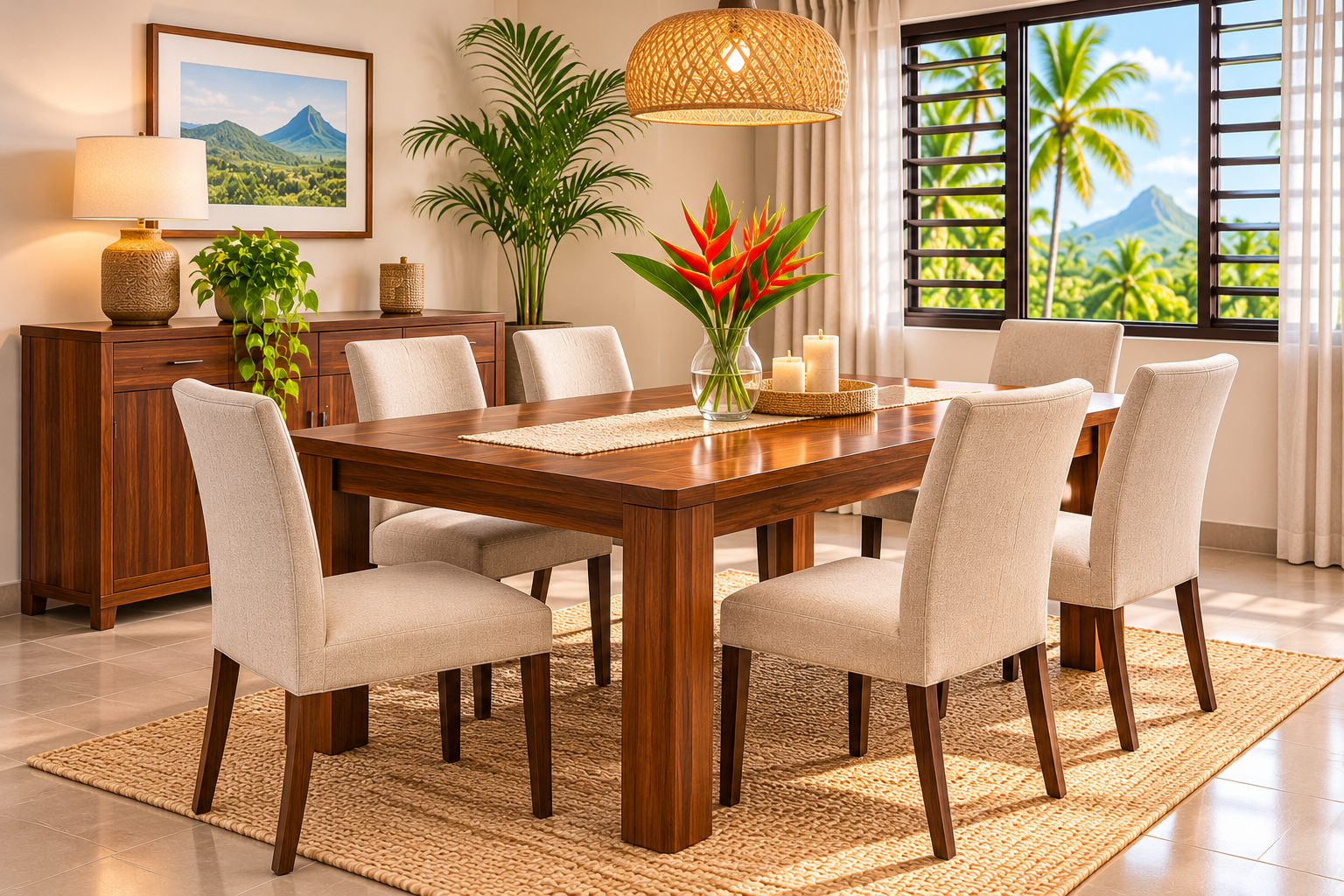
An inherited walnut table, modern upholstered chairs: the classic successful mix.
How to Mix Old and New Furniture Without It Looking Mismatched
A practical styling guide for Mauritian homes built piece by piece: coordinating traditional, inherited and modern furniture with confidence.
Traditional walnut, a modern grey sofa and a warm rug to connect them.
Most TFP customers aren't furnishing a room from scratch. They're replacing one piece, usually the sofa, wardrobe or dining set, while keeping everything else. A new grey sofa beside an existing dark wooden TV unit and carved coffee table is one of the most common situations we see.
Many customers worry the new piece will look out of place. Some even put off an upgrade they'd really benefit from, or feel they have to replace a whole set when only one piece needs changing. You don't.
Mixing furniture styles is increasingly popular, especially among younger Mauritian homeowners, and gradual upgrading is a sensible, budget-friendly way to furnish a home. This guide shows you how to make old and new pieces look like they belong together.
What Mixing Old and New Furniture Means
Mixing old and new furniture means combining existing, inherited, traditional or older pieces with contemporary ones to create a coordinated room without replacing everything. "Old" can mean several things:
- Older furniture in good condition
- Antiques with genuine historical value
- Vintage pieces from a particular design era
- Traditional furniture in Mauritius's classic wooden styles
- Furniture from different collections bought at different times
Old doesn't mean outdated or poor quality. Many older pieces, with solid wood and traditional joinery, are better made than budget modern alternatives. A well-kept older piece can even become the most distinctive feature of a modern room. Mixing styles doesn't mean ignoring design principles, though. It means using them thoughtfully.
Why Mauritian Homes Naturally Mix Furniture
- Furniture is bought gradually. Most households upgrade one piece at a time over many years.
- Furniture is inherited. Heavy wooden dining tables, display cabinets and wardrobes are often passed down from parents and grandparents.
- Sentiment matters. Keeping a piece because it means something to your family is a perfectly good reason.
- Quality is worth keeping. Many families keep traditional wooden pieces simply because they're so well made.
- Furniture moves around. A dining chair becomes a bedroom chair; a living room cabinet moves to the hallway.
A grey sofa, a walnut TV unit and a traditional coffee table in one room is very common, and it can look beautiful with the right coordination. Replacing everything at once isn't practical for most families. Gradual upgrading isn't a compromise; it's often the better way to build a home.
Step 1: Choose a Leading Style
Common directions include:
- Contemporary: clean lines and a calm, current feel
- Scandinavian: light woods, soft neutrals and simplicity
- Traditional: rich wood, classic shapes and detail
- Warm family-home: relaxed, comfortable and welcoming
- Hotel-inspired luxury: polished, layered and elegant
- Transitional: the bridge between traditional and contemporary
- Eclectic: many styles mixed freely, which takes a confident eye
Why Transitional Style Matters Here
Transitional style is made for this exact situation. It pairs clean-lined contemporary pieces with traditional ones, linked by a neutral palette and shared warmth. It's ideal for combining traditional wooden furniture with modern upholstered sofas.
Transitional is different from eclectic. Transitional deliberately bridges two styles; eclectic draws from many styles without one clear bridge. Both can work, but they need different approaches.
Decide whether your room will be mainly modern with traditional touches or mainly traditional with modern touches. That choice guides everything else. One traditional statement piece usually works better in a modern room than several. These aren't strict categories you must follow, just a helpful direction.
Step 2: Balance the Styles (the 70/30 Guide)
For Mauritian family homes, a roughly 70/30 balance works well: about 70% of one style and 30% of the other. That's enough for the room to feel genuinely mixed, not just a single token accent.
- Keep the largest pieces (sofa, bed, wardrobe or dining table) in the leading style.
- Use smaller furniture and accessories to bring in the contrasting style.
- This is a visual guide, so there's no need to count pieces.
Warm with warm reads as intentional; warm with cool needs a bridge.
Step 3: Coordinate Your Colours
Colour is the most powerful and affordable tool for linking mixed furniture. The most common challenge is coordinating a new sofa with older wooden pieces.
- Common existing wood colours: dark walnut, honey oak, wenge, cinnamon or reddish brown, natural oak and white
- Popular TFP sofa colours today: grey (the most common), beige and greige, cream, warm brown and olive (growing in popularity)
The 60-30-10 Guide
- 60% main neutral: walls and the main sofa
- 30% secondary: curtains, rug and secondary furniture
- 10% accent: cushions, a plant or a lampshade
Example: grey sofa + walnut TV unit + cream cushions + warm neutral rug.
A common mistake is using too many accent colours. Instead, repeat one colour in several places around the room. That repetition is what makes pieces look connected.
For more colour ideas, read How to Use Colour Psychology to Choose Furniture for Each Room.
Step 4: Mix Wood Finishes Intentionally
Mixing wood finishes is the most common coordination challenge in Mauritian homes. The most useful idea to understand is undertone:
- Warm tones (honey, cinnamon, walnut, medium oak) generally work well together.
- Cool tones (grey-washed oak, white, dark ebonised finishes) generally work well together.
- Mixing warm and cool without a bridge creates visual tension.
| Combination | How it works |
|---|---|
| Oak + walnut | Both warm, so generally compatible |
| Cinnamon + walnut | Same warm family, so generally compatible |
| Light oak + dark walnut | Attractive contrast when it looks deliberate |
| Honey oak + wenge | High contrast; can work if clearly intentional |
| Dark brown + white | High contrast; works as a deliberate choice |
| Natural oak + grey-washed oak | Warm vs cool, so it can clash without a bridge |
Making Different Woods Work
- Repeat each wood tone at least twice where you can. If your coffee table is honey oak, a wooden tray or lamp base in a similar tone makes it look deliberate.
- Small accessories can echo the tone of a large piece.
- You don't need to match the grain.
- Avoid "almost matching". Trying to match an old finish that's no longer available rarely works, and a near-miss looks like a mistake. Clear contrast looks like a choice.
Traditional Wooden Furniture With a Modern Sofa
This is the most common scenario at TFP: a carved wooden coffee table or walnut TV unit with a new grey or beige sofa. It can look wonderful.
- Neutral upholstery balances ornate wood. A calm sofa lets the wood's character shine without competing.
- Avoid a visually heavy room. Dark wood plus a dark sofa can feel oppressive, so lighter upholstery, curtains and walls give breathing space.
- Make the coffee table the star. Treat a traditional coffee table as the room's statement piece, not a leftover.
- Keep surroundings simple. Detailed, carved furniture doesn't need lots of ornate objects around it.
Before
Traditional walnut furniture and a new grey sofa that look disconnected, competing for attention with nothing linking them.
After
Same furniture, plus cream cushions on the grey sofa, a warm neutral rug, simpler lighting and a wooden tray on the coffee table repeating the walnut tone. The room now looks planned.
Mixing Modern Furniture With Inherited Pieces
Many Mauritian families keep furniture with sentimental value, especially heavy wooden dining tables, display cabinets and bedroom furniture from parents or grandparents. Sentimental value is a perfectly good reason to keep a piece, even if it doesn't follow current trends.
- Make it the focal point. An inherited wooden cabinet can anchor a contemporary living room.
- Pair antiques with modern chairs. An antique dining table with modern upholstered chairs is one of the most successful combinations in interior design.
- Give it space. Don't crowd an ornate piece with other statement furniture. One strong piece anchors a room; several compete.
- Refresh it gently. Cleaning, waxing, repolishing or touching up marks can help an older piece fit in beautifully.
How to Mix Old and New Furniture Without It Looking Mismatched
Proportion and Scale
A very large traditional coffee table beside a compact modern sofa immediately looks accidental, even when the colours work. Height, width and visual weight all matter.
Visual weight describes how heavy, dominant or attention-grabbing a piece looks in a room. Dark, bulky furniture looks heavier than slim, light-coloured furniture of the same size. To balance a heavy wooden cabinet, choose lighter upholstered pieces that still have enough presence, through size, colour or design, not to be overpowered.
- Measure your existing pieces before buying new ones.
- Photograph the room from several angles to judge proportions.
- Check the new sofa suits your existing coffee table and TV unit in size.
Shapes, Lines and Furniture Legs
Straight-lined modern furniture and curved traditional pieces can work together when size, colour and placement are balanced.
- Echo a shape. If your traditional coffee table has curved legs, a round mirror, rounded lamp or curved cushion elsewhere creates a visual link.
- Use straight-lined accessories to connect traditional furniture with a modern sofa.
- Watch the legs. A slim-legged modern sofa can look disconnected beside very bulky traditional cabinets. You don't need matching legs, but in-between pieces help bridge the extremes.
Balancing visual weight matters more than matching exact shapes.
Mixing Materials
Mixing materials adds interest. A room where everything is the same material can feel flat. Combinations that work well:
- Wood + metal: the most versatile modern mix. A metal-frame coffee table can sit nicely beside an older wooden TV unit.
- Wood + glass: a classic pairing
- Wood + fabric: the most common combination in homes
- Metal + marble-look ceramic: a contemporary dining look, softened by wooden accents. A marble-look dining table can also coordinate with a wooden sideboard.
- PU leather + wood: a classic Mauritian living room pairing
- Upholstered fabric + glass
Repeat at least one material elsewhere in the room. Black metal chair legs that echo black cabinet handles or light fittings are one of the cheapest and most effective coordination tricks. Avoid too many unrelated materials in a small room.
Mixing Upholstery Fabrics
Textures can differ as long as the colours coordinate. A fabric sofa can work with PU leather armchairs, and a velvet accent chair can sit beside a linen-look sofa in the same colour family.
A grey fabric sofa with brown PU leather chairs is common in Mauritian homes. Make it look intentional with cushions in a warm neutral that echoes the brown, or a rug that picks up both tones.
Think about the climate too. Heavy velvet in a room without air-conditioning looks heavy and feels warm, so breathable fabrics are usually more comfortable. Remember that different fabrics need different care. See The Complete Guide to Sofa Fabrics.
Cushions, Rugs and Curtains: Your Best Connecting Tools
Accessories are the most affordable, flexible and easy-to-change way to link old and new furniture.
- Cushions: choose colours that reference both the new sofa and the older wood. A warm amber-cream cushion beside a grey sofa and walnut cabinet bridges the two beautifully.
- Rugs: a rug defines the seating area and makes unrelated pieces feel grouped. Size it based on where the furniture sits.
- Curtains: neutral curtains soften the contrast between styles. Heavy patterns add a third competing element when the furniture already needs careful balancing.
Lighting and Visual Balance
Lighting changes how wood and fabric colours look together. Warm, amber-toned light makes warm wood tones look richer and more connected; cool daylight-toned bulbs can make them look more varied and disjointed.
- Add lamps. Most Mauritian living rooms rely on one central ceiling light, which gives flat, even light. Table and floor lamps create warm pools of light that make furniture groupings feel planned.
- Keep one colour temperature in each room. Mixing warm and cool bulbs looks inconsistent.
- Light dark pieces. A lamp beside a dark cabinet reveals its grain and warmth instead of just its bulk.
- Use mirrors to reflect light and balance dark traditional furniture, but position them to avoid strong sunlight glare.
Same furniture, coordinated accessories: from accumulated to composed.
Living Room Combinations
Replacing the sofa while keeping everything else is the most common living room upgrade at TFP. Typical combinations include:
- New sofa + existing coffee table
- New sofa + existing TV unit
- Traditional cabinet + modern sofa
- Modern L-shaped sofa + inherited sideboard
- Different armchairs + existing sofa
- Choose one dominant piece, usually the sofa, sometimes an inherited cabinet, and let the others support it.
- Pick your sofa colour based on what you already own. Bring photos of your coffee table and TV unit to TFP.
- Watch out for large L-shaped sofas. They can overpower smaller traditional furniture, so choose a lighter, neutral tone to reduce their visual weight.
- Coffee tables and TV units don't need to match, but they should coordinate.
Read more in Does Living Room Furniture Have to Match? The Mauritian Home Guide.
Dining Room Combinations
Replacing dining chairs while keeping the table is one of the most common dining upgrades at TFP.
- Modern upholstered chairs + traditional wooden table: a beautiful contrast. For example, an old walnut table with modern beige upholstered chairs.
- Wooden chairs + marble-look table: works when the chair wood matches other wood in the room.
- Let the table lead: the table can be the traditional anchor while the chairs bring in modern style.
- Sideboards: link a sideboard and table in different finishes through shared colours, a repeated material or accessories.
Chairs don't need to match the table's material, but check height, comfort and proportion before looks. A beautiful chair that doesn't fit under the table or isn't comfortable for a long meal is a poor choice. Compare table materials in Marble Dining Table vs Wood Dining Table: Which Is Right for Mauritius?
Bedroom Combinations
Buying a new bed while keeping an existing wardrobe is one of the most common bedroom upgrades.
- A modern upholstered bed can work with an older wooden wardrobe when bedding, curtains and accessories link them.
- Bedding and curtains are your best connectors. Shared colours across both create continuity.
- A white or beige bed frame works well with walnut furniture, keeping the room from feeling heavy while the walnut anchors it.
- Bedside tables don't need to match. Two different ones can look intentional if they share a colour family or material, like one natural wood and one painted to echo the bedding.
When does asymmetry work? When the two pieces share at least one thing (colour, material or design style), it looks like a styling choice. Without that link, it looks like an accident.
8 Common Mixing Mistakes
- Choosing a new piece without thinking about what it will sit beside. Judge it against photos of your room, not in isolation in the showroom.
- Too many wood tones. Three or more finishes with nothing linking them.
- No repeated colour. Every piece in its own colour family.
- Mismatched proportions. Size differences that throw the room off balance.
- Competing statement pieces. Several dominant pieces fighting for attention.
- Accidentally mixing warm and cool woods. Honey oak beside grey-washed oak with no bridge.
- Over-decorating around detailed furniture. Making an already busy room busier.
- Almost-matching instead of contrasting. A near-match looks like a mistake; clear contrast looks like a choice.
When Mixing Doesn't Work
To be honest, sometimes a piece can't be saved with styling. Consider replacing it when:
- It's so worn that nothing new looks right beside it
- The colour difference is too extreme for accessories to bridge
- The size difference makes the pieces look like they belong in different rooms
- Its style is so dominant that it overwhelms any modern addition
See real transformations in Before and After: How TFP's Furniture Exchange Transformed Mauritian Homes, plan a bigger refresh with How to Redesign Your Home: A Step-by-Step Guide, or learn how tone affects space in Dark Furniture vs Light Furniture: Which Makes a Room Feel Bigger?
Closing Thoughts
Your furniture does not need to match perfectly to look beautiful together. The secret is creating a visual connection through colour, materials, proportions and a consistent design direction.
A walnut cabinet inherited from your parents, a new grey sofa from TFP and a warm rug chosen to connect them can create a living room that feels more personal than any perfectly matched furniture set, because it reflects the way your home was actually built, piece by piece, choice by choice.
The goal is not to make your furniture look like it all arrived on the same day. It is to make it look like it was always meant to be together.
Frequently Asked Questions
The Basics
Can old and new furniture look good together?
Yes. Old and new furniture look good together when they share a visual connection through colour, wood tone, materials, proportion and one leading style.
Do I need to replace my whole furniture set when buying one new piece?
No. Most TFP customers upgrade one piece at a time. With good coordination, a single new piece can sit comfortably alongside your existing furniture.
What is transitional interior style?
Transitional style bridges traditional and contemporary design, pairing clean-lined modern pieces with traditional ones through a neutral palette and shared warmth.
What is the 70/30 rule for mixing furniture styles?
It's a visual guide where about 70% of the room follows one leading style and about 30% adds a contrasting style, mainly through smaller pieces and accessories.
Colour and Wood
What sofa colour goes with dark wooden furniture?
Neutral colours like grey, beige, greige and cream work well with dark wood, keeping the room light and letting the wood stand out.
Can I mix different wood finishes in one room?
Yes. Keep to woods with similar undertones where possible, repeat each tone at least twice, and make any contrast look deliberate.
Do oak and walnut go together?
Yes. Oak and walnut both have warm undertones, so they generally work well together, and light oak with dark walnut makes an attractive contrast.
Should I try to match my new furniture to an old wood finish?
Usually not. Exact matches to older finishes are rarely possible, and an almost-match can look like a mistake. A clear, intentional contrast usually looks better.
Pieces and Rooms
Can a modern sofa work with a traditional wooden coffee table?
Yes. Choose neutral upholstery, keep the surroundings simple and treat the coffee table as the room's statement piece.
Can I use modern chairs with an old wooden dining table?
Yes. Modern upholstered chairs with a traditional wooden table is one of the most successful mixing combinations. Check height and comfort first.
Do my bedside tables need to match?
No. Different bedside tables can look intentional if they share a colour family, material or design detail.
How do I make inherited furniture work in a modern home?
Make it the focal point, give it space, keep nearby pieces simple and connect it to the room with colour and accessories. Seek professional advice before refinishing valuable antiques.
Practical Tips
What is the easiest way to connect old and new furniture?
Accessories. Cushions, a rug and curtains in colours that reference both the old and new pieces can pull a room together without buying new furniture.
Does lighting affect how mixed furniture looks?
Yes. Warm lighting makes warm wood tones look richer and more connected, and adding lamps instead of relying on one ceiling light makes a room feel more cohesive.
What should I bring to TFP when buying a new piece?
Bring photographs and measurements of the furniture the new piece will sit beside, such as your coffee table and TV unit, so our team can help you coordinate.
When should I replace a piece instead of mixing it?
Consider replacing it when it's badly worn, or when its colour, size or style difference is too extreme to bridge. TFP Furniture Exchange can help make replacement easier.
An inherited walnut table, modern upholstered chairs: the classic successful mix.